
Last updated November 16, 2026
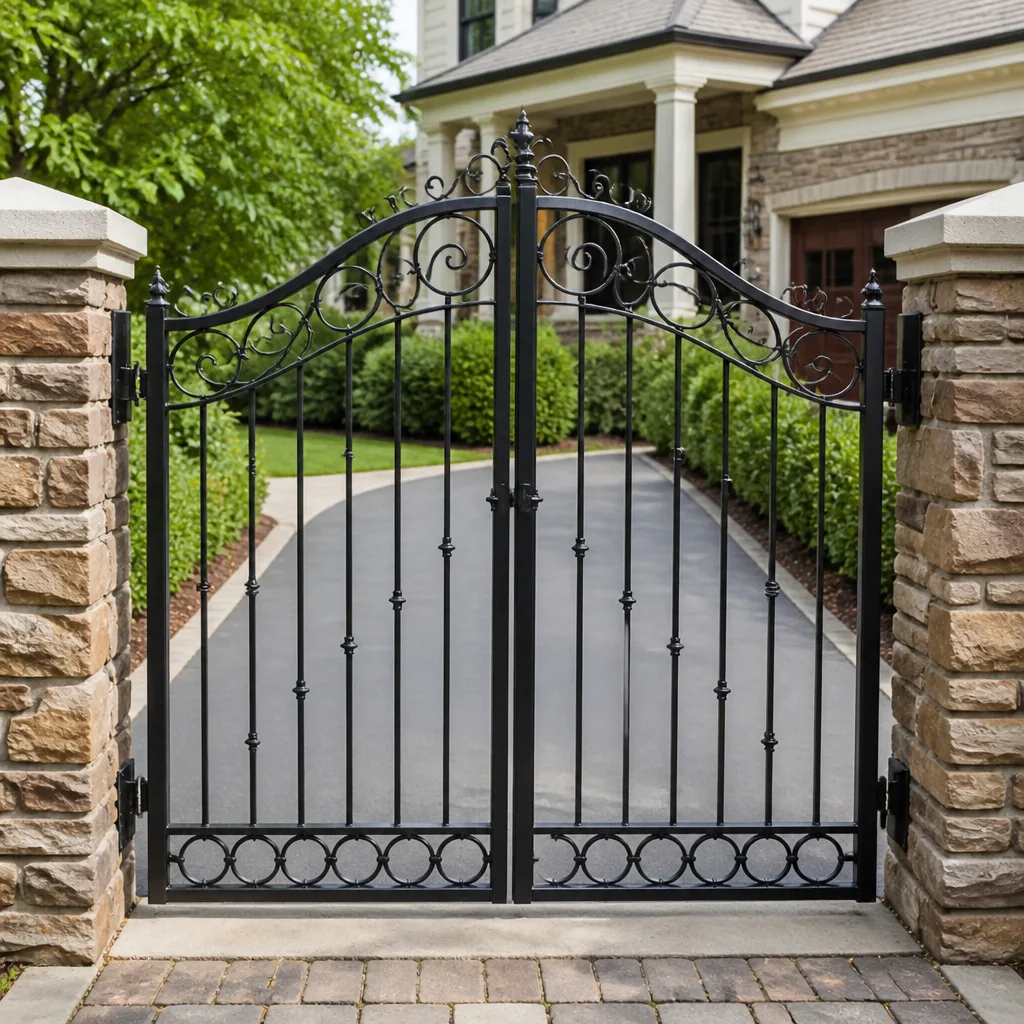 Wrought iron
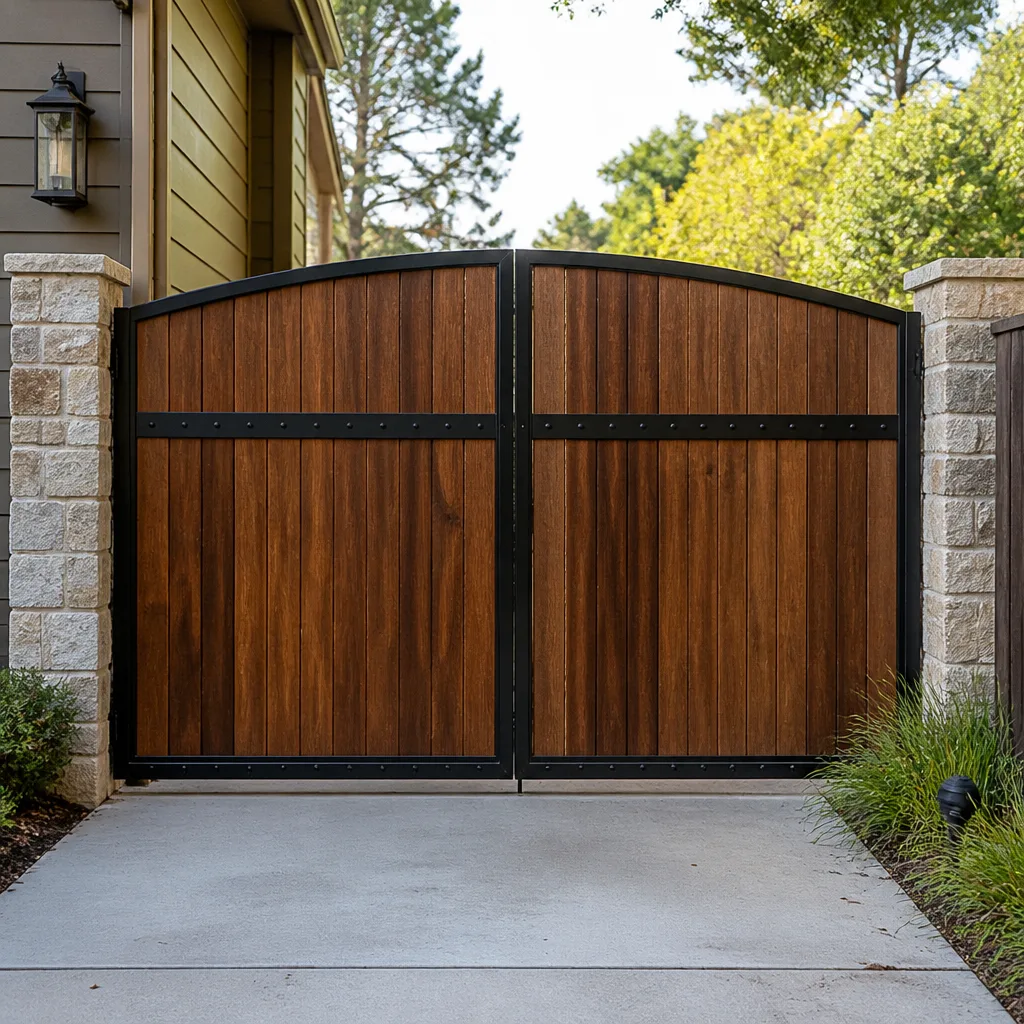 Wood & steel frame
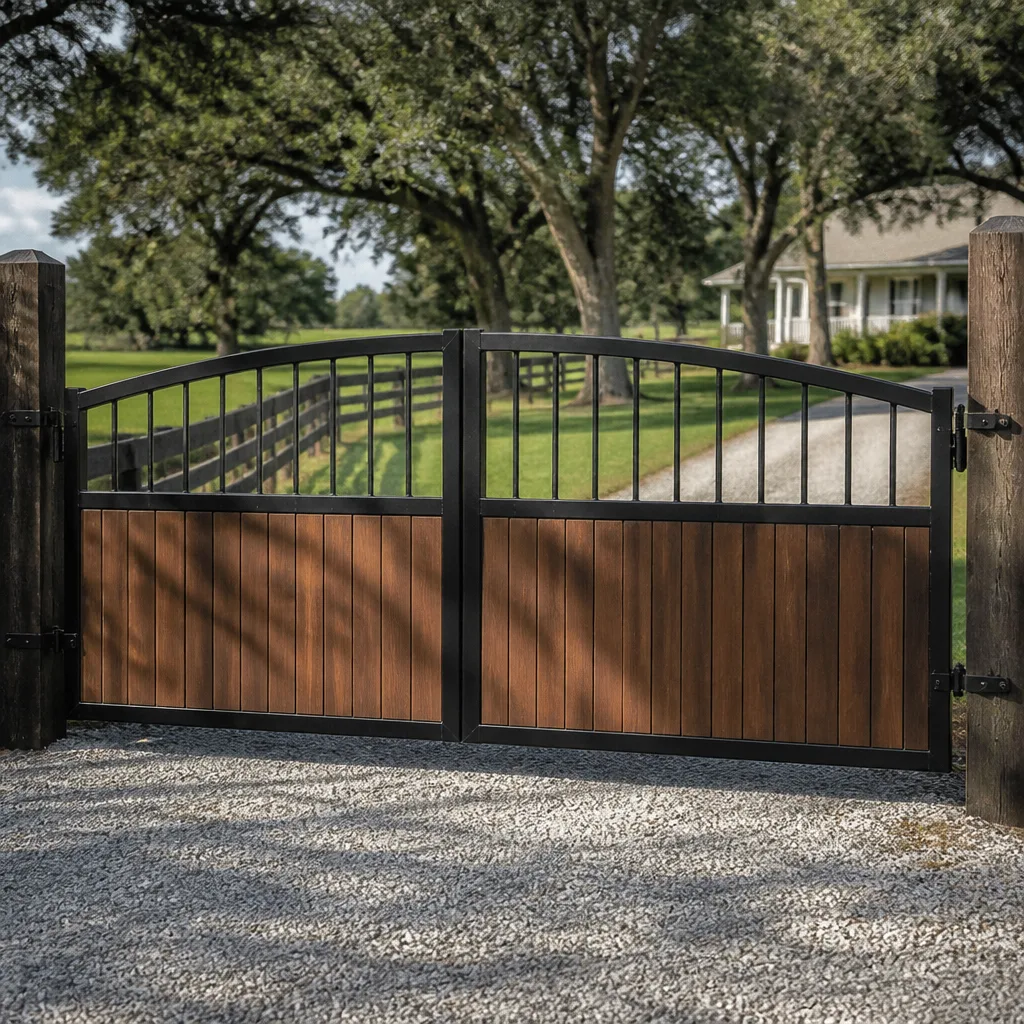 Farm & ranch
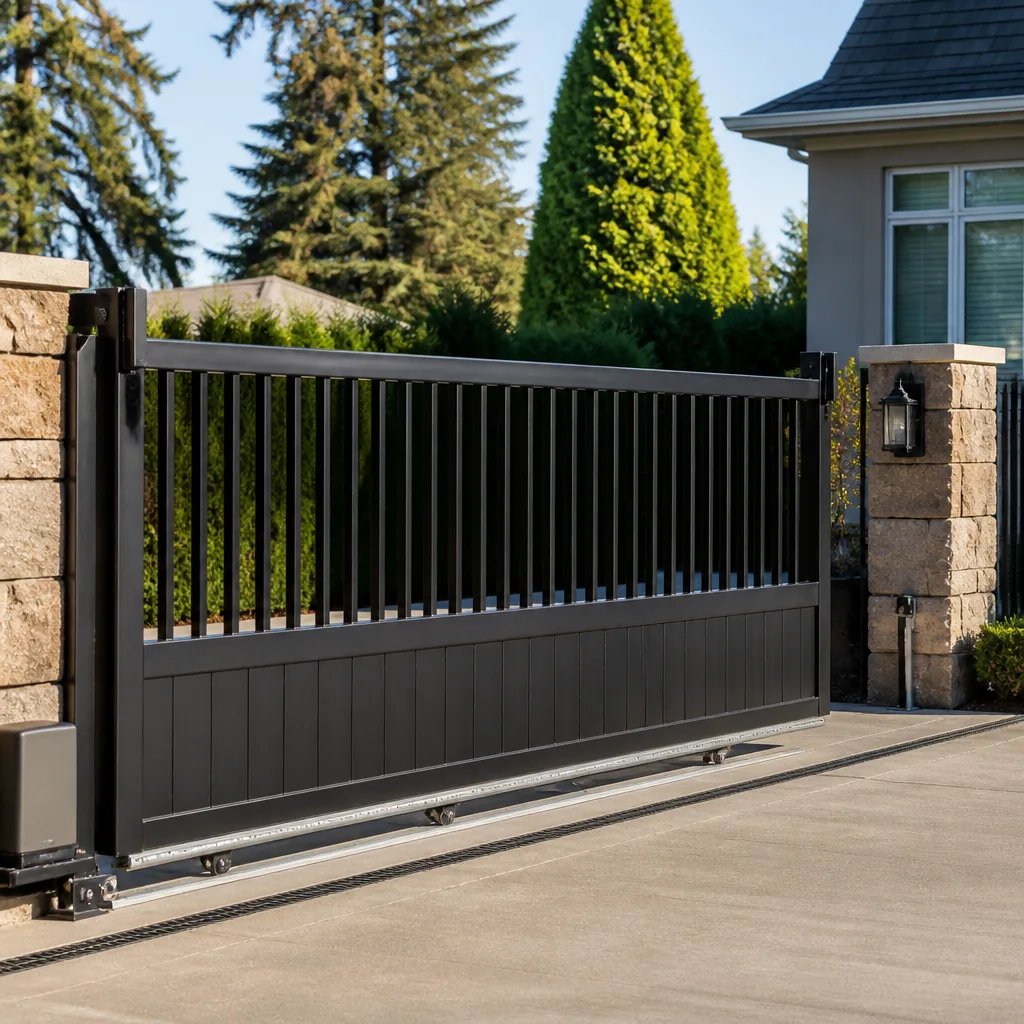 Sliding driveway gates
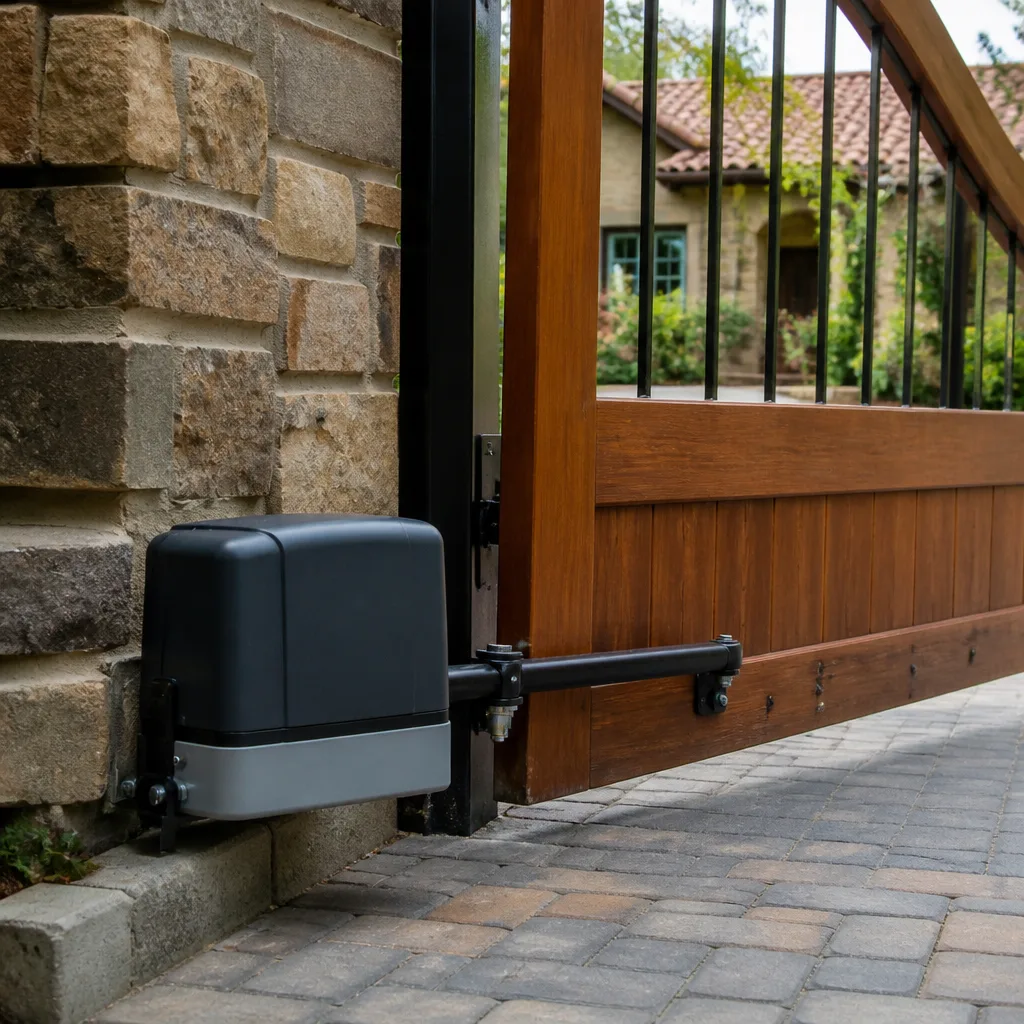 LiftMaster operators
Free on-site gate assessment - hinges, posts, and your LiftMaster or Nice gate operator checked before anything is quoted
The assessment is free and the quote is the invoice.
Get your free estimateThe Complete Guide to Gate Repair in Aurora
A gate that reverses before it fully opens isn’t broken. It’s communicating. Most Aurora homeowners call that a malfunction, but a technician reads it as one of two very different problems: limit switch drift or obstacle sensor misalignment. The first is often a quick adjustment. The second can mean a sensor swap. They are not the same repair, and treating them as one is how people end up paying for parts they didn’t need. That distinction sits at the heart of this guide. What follows maps the actual failure patterns we see across Aurora, organized by gate type and drive system, so you can understand what’s happening before anyone touches your gate.
Quick Answer
Gate repair in Aurora starts with identifying your drive system (hydraulic, electromechanical, or solar-assisted) and then matching the symptom to the correct component. Most failures trace back to a handful of causes: limit switch drift, sensor misalignment, actuator wear from freeze-thaw cycles, or control board faults. For electric and automated systems, a specialist should diagnose before any repair is attempted. Call (866) 361-5021 for a free estimate.
Styles & brands we work with
- Wrought iron
- Wood & steel frame
- Farm & ranch
- Sliding driveway gates
- LiftMaster operators
Table of Contents
- How Do You Identify Your Gate’s Drive System?
- How Do Aurora’s Freeze-Thaw Cycles Damage Gate Operators?
- Why Do Residential and Commercial Gates Fail Differently in Aurora?
- What Do Common Gate Symptoms Actually Mean?
- Repair or Replace? A Decision Framework
- What Does Aurora-Area Code Enforcement Require During a Repair?
- Where Should You Stop and Call a Professional?
- Working With Your Gate’s Brand
How Do You Identify Your Gate’s Drive System?
Before you call anyone, find out what kind of operator moves your gate. This single fact changes the entire diagnosis. A hydraulic operator with a fluid leak behaves nothing like an electromechanical arm that’s lost its limit settings, even if both leave the gate half-open. We’ve seen homeowners describe the same symptom and get quoted two completely different repairs because the drive system was never confirmed first.
Here’s how to tell them apart without touching any wiring:
- Hydraulic: You’ll see a fluid reservoir or a pump housing, often with visible oil weeping near seals. The gate moves in a smooth, consistent push. These are common on heavier residential swing gates and older commercial installs.
- Electromechanical: A motor arm, gear housing, or rack-and-pinion rail drives the gate. Movement can feel slightly more mechanical or stepped. This covers most slide gates and many swing operators, including plenty of FAAC and BFT units we work on.
- Solar-assisted: You’ll spot a panel and a battery box near the operator. These are popular on rural-edge properties and long driveways. Low battery or panel output is a frequent culprit that mimics a dead motor.
Once you know whether you’re dealing with a hydraulic pump, a gear-driven motor, or a solar-charged battery system, the conversation with a technician gets sharper immediately. When you call electric gate repair, tell us the brand if you can find it on the housing plate. It saves diagnostic time and points us straight to the right parts.
How Do Aurora’s Freeze-Thaw Cycles Damage Gate Operators?
Aurora sits in a climate that swings hard between freezing nights and thawing afternoons for much of the winter and early spring. That cycle is brutal on gate hardware, and it damages underground and above-ground components in completely different ways. Understanding which type you have helps you know what to watch for.
Underground actuator housings, common with in-ground swing operators, sit below the frost line where soil moisture freezes and expands repeatedly. That expansion puts pressure on the housing seals. Once a seal fails, meltwater gets in, and when the next freeze hits, that trapped water expands against the internals. The result is cracked housings, seized bearings, and water-damaged control components. These failures often surface in late winter, weeks after the actual damage occurred.
Above-ground operators face a different pattern. They deal with condensation that forms on control boards when cold metal meets warm daytime air. Repeated condensation, combined with road salt tracked onto gate hardware from nearby streets, corrodes terminal connections and circuit traces. We’ve opened control boxes on Linear and Viking operators and found green corrosion on terminals that were perfectly clean the season before.
- Underground operators: watch for soft ground around the housing, sluggish movement after a freeze, or water pooling near the cover. These signal seal failure.
- Above-ground operators: watch for intermittent operation that clears up in dry weather, flickering status lights, or a motor that sounds labored on cold mornings.
- Both types: hardened grease and stiff pivots are normal in deep cold, but a gate that struggles in freezing temperatures and improves by afternoon may have a lubrication or binding issue rather than a motor fault.
Seasonal checks in late fall, before the first hard freeze, catch most of this before it becomes a spring repair. If your gate fails after a cold snap, gate repair should include a look at the seals and the control box, not just the motor.
Why Do Residential and Commercial Gates Fail Differently in Aurora?
Two gates can show the identical symptom, a gate that won’t fully open, and need completely different fixes depending on where they sit. Aurora’s layout makes this especially clear. Older neighborhoods with quarter-acre lots tend to have aging swing gates that have been in service for years. Commercial corridors, especially around Route 59, run newer, larger slide gates on high-cycle operators. The wear patterns don’t match.
Residential swing gates in Aurora’s established neighborhoods usually fail from slow causes: hinge wear, sagging that throws off limit positions, actuator fatigue, or a control board that’s aged out. These gates open a few times a day. The failure is often gradual, and the fix is frequently mechanical adjustment or a component swap.
Commercial slide gates along the retail and industrial stretches open dozens or hundreds of times a day. Their failures are driven by cycle count. High-cycle operators wear through gear sets, brake components, and limit switches far faster than residential units. When a commercial gate fails, the root cause is almost always the number of cycles, not age alone. That’s why commercial servicing depends on checking the operator’s hour meter, which logs run time and cycle history.
We see DoorKing and FAAC commercial operators regularly, and the hour-meter reading often tells the whole story. A high-cycle operator with a worn gear set needs different attention than a residential unit with the same symptom. If you manage a commercial property, treat a gate failure as a diagnostic question first, not a parts question. The Aurora commercial corridor has enough gate traffic that cycle-driven wear is the norm, not the exception.
What Do Common Gate Symptoms Actually Mean?
Here’s where the drive-system knowledge pays off. The chart below maps the symptoms we hear most against their most likely causes. Use it to understand what you’re dealing with, then leave the actual testing to a technician, especially where power, wiring, or heavy moving panels are involved.
- Gate reverses before fully opening: Most often limit switch drift or obstacle sensor misalignment. The sensor path may be interrupted by debris, a misaligned reflector, or a sun angle. This is the classic two-repair problem from the opening of this guide.
- Gate opens but won’t close: Frequently a sensor or safety-edge fault, sometimes a control board issue. The operator is being told something is in the way when it isn’t.
- Gate moves slowly or struggles: Binding hinges, worn rollers, sagging gate leaves, or a failing motor. On solar units, low battery.
- Gate stops halfway and reverses: Limit settings, obstruction sensors, or motor overload protection kicking in.
- Gate won’t respond to the remote: Could be the remote battery, the receiver, or the control board. Test with a second remote and a keypad before assuming the worst.
- Gate makes grinding or clicking sounds: Gear wear or a slipping drive. On hydraulic units, low fluid.
These symptoms overlap more than any generic list admits. A reversing gate on a hydraulic operator points to limit drift, but a reversing gate on a solar-assisted slide gate can point to a battery that can’t deliver enough current at the worst moment. Match the symptom to the drive type before you decide what it means.
Repair or Replace? A Decision Framework
This is the question that saves and costs the most money. A gate operator that’s a decade old with an obsolete control board may cost more to fix than a modern operator costs to install. A gate that’s structurally sound with a failing but replaceable motor is almost always worth repairing. Here’s the framework we use.
- Check parts availability first. If the operator is still supported and replacement parts exist, repair usually wins. If the control board is discontinued and unavailable, repair becomes fragile.
- Read the actuator hour meter. High cycle counts on a commercial operator signal approaching end of life. A modest count on a younger operator points toward a single-component fix.
- Check the gate structure itself. A failing operator on a sagging, rusted gate means the gate is the real problem. Replacing the operator alone won’t fix a frame that binds.
- Consider the drive system. Hydraulic systems with breached housings are often more expensive to rebuild than to replace. Solar units can often be kept alive with battery replacement.
- Match parts to the rest of the system. A modern control board on an aging motor still saves you only until the motor fails. If multiple major components are near end of life, replacement is the cleaner path.
We work with residential brands like Mighty Mule and Ghost Controls through heavy commercial operators from BFT and DoorKing, so we can tell you honestly whether your specific unit is worth keeping. When replacement makes more sense, the same team handles gate repair Aurora and full gate installation, so you’re not juggling two contractors. Get a free estimate before you decide; a professional can read the hour meter and check parts availability in one visit.
What Does Aurora-Area Code Enforcement Require During a Repair?
Opening up an automated gate system for repair isn’t just a technical job; it’s something local authorities care about. Aurora-area code enforcement generally requires that automated gates have functioning safety devices, and a repair that disables an obstacle sensor or safety edge can leave the gate non-compliant. When we open a system up, we check that the safety devices work before we close it back up.
Here’s what typically matters during a repair:
- Safety edges and sensors: These must function after any repair. A gate that operates but no longer detects an obstruction is a liability and can violate local requirements.
- Wiring and power: Any electrical work should meet local electrical code, which is why we recommend licensed electrical handling for the power run.
- Permits: New installations and significant electrical modifications often require permits. Always ask your city’s building department what applies to your property before work begins. Requirements vary by jurisdiction and by whether your gate faces a public right-of-way.
If you’re unsure what applies to your property, a free on-site estimate can flag what the repair will involve, and you can confirm permit questions with the city. We don’t guess at code specifics for your address; we tell you what the work requires and you confirm with the authority having jurisdiction.
Where Should You Stop and Call a Professional?
We fix gates for a living, and we still draw a hard line on what a homeowner should touch. The dangerous parts of a gate system are the operator’s wiring and power, heavy panels that can crush, and slide gates that can come off the track. Those are not DIY territory. An automated gate stores real force; a panel in motion can cause serious injury, and AC power at the operator is not something to probe without training.
Stop and call a professional if:
- The gate won’t move at all or moves unpredictably near people or vehicles.
- You see damaged wiring, burnt control components, or smell something electrical.
- A heavy swing or slide panel is sagging, off its track, or unstable.
- The safety sensors or safety edges aren’t working.
- You don’t know your drive system and the symptoms overlap.
A technician can diagnose safely and tell you honestly whether the gate needs a repair or a replacement. When a gate poses a crush hazard, the right call is a specialist, not a weekend experiment.
Working With Your Gate’s Brand
Knowing your brand matters. Different operators behave differently, and a technician who’s familiar with your unit skips the trial-and-error phase. We’re factory-familiar with nine major gate brands: LiftMaster, FAAC, BFT, Linear, Viking, Ghost Controls, DoorKing, Elite, and Mighty Mule. That spans the full range from residential DIY-installed openers to heavy-duty commercial operators.
If your gate runs a FAAC hydraulic operator, we know its seal and fluid patterns. If it’s a Linear or Viking residential unit, we know its control board tendencies. If it’s a DoorKing commercial operator, we read the hour meter the way it’s meant to be read. And if it’s a Mighty Mule or Ghost Controls system that the previous owner installed, we can walk you through whether it’s worth keeping or upgrading.
We’re independent and experienced with these brands; we’re not a single-brand dealer trying to sell you a specific product. That means our advice on repair versus replace is based on your system, not on what we stock. Whatever brand is on your gate, the first step is the same: tell us what you’ve got and we’ll get you back up and running. Call (866) 361-5021. We answer 24/7. Fast dispatch from 7am to 7pm, Sunday through Friday.
Common Mistakes to Avoid
- Treating every symptom as a motor failure. The motor is often the last thing to fail. Limit switches, sensors, and control boards cause most “motor” symptoms. Test the cheap components first.
- Skipping the drive-system check. Quoting a hydraulic repair on an electromechanical gate wastes everyone’s time. Identify the drive type before any technician touches it.
- Ignoring the gate structure. A new operator on a sagging or rusted frame will fail again. Check the gate itself before blaming the motor.
- Disabling safety sensors to “get by.” This is unsafe and often non-compliant. A gate that doesn’t detect obstruction is a hazard, not a fix.
- Assuming Aurora weather is the same every season. Freeze-thaw damage to underground operators surfaces weeks after the cold snap. Water-damaged control boxes can hide behind a dried-up symptom.
- Replacing a whole operator when only a component is gone. Read the hour meter and check parts availability before committing to a full replacement.
- Hiring a general handyman. Gate operators, wiring, and safety devices are specialist work. A fencing company that dabbles in gates often lacks the diagnostic depth.
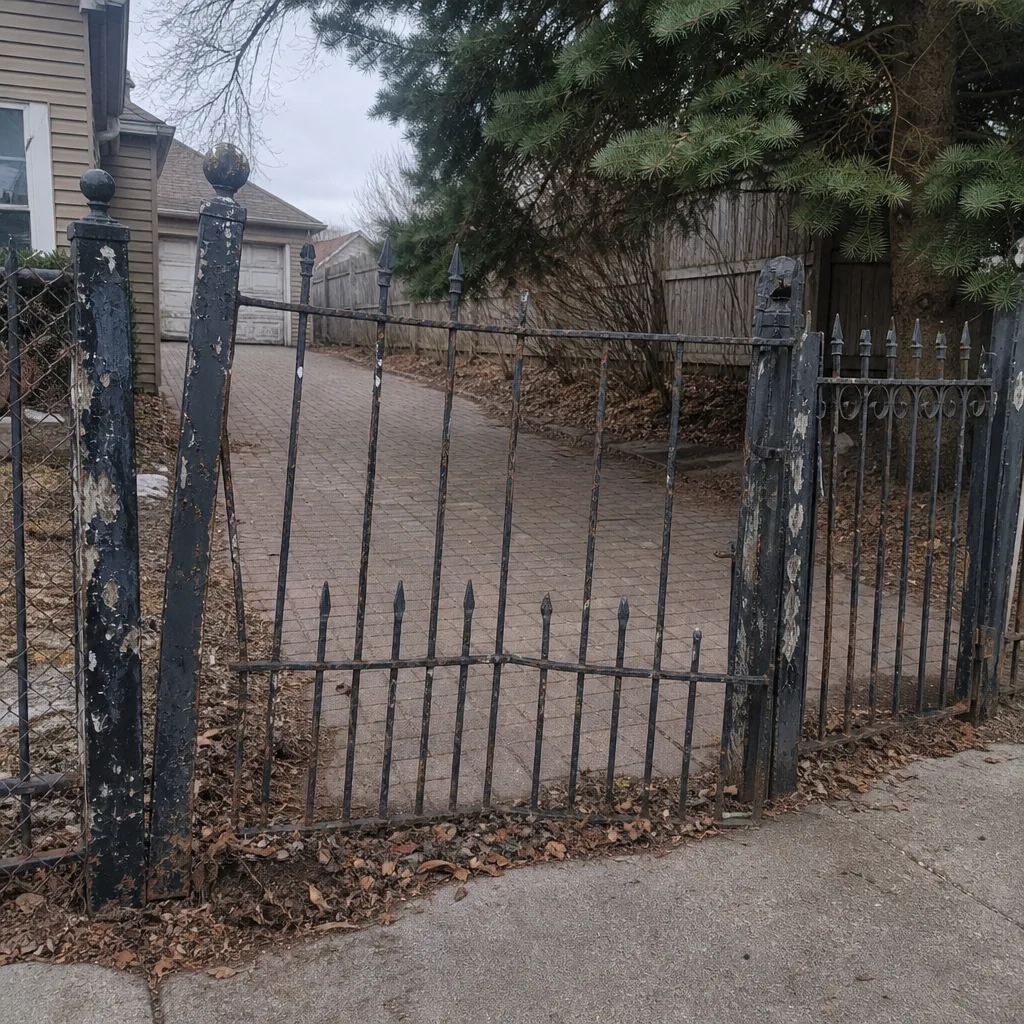
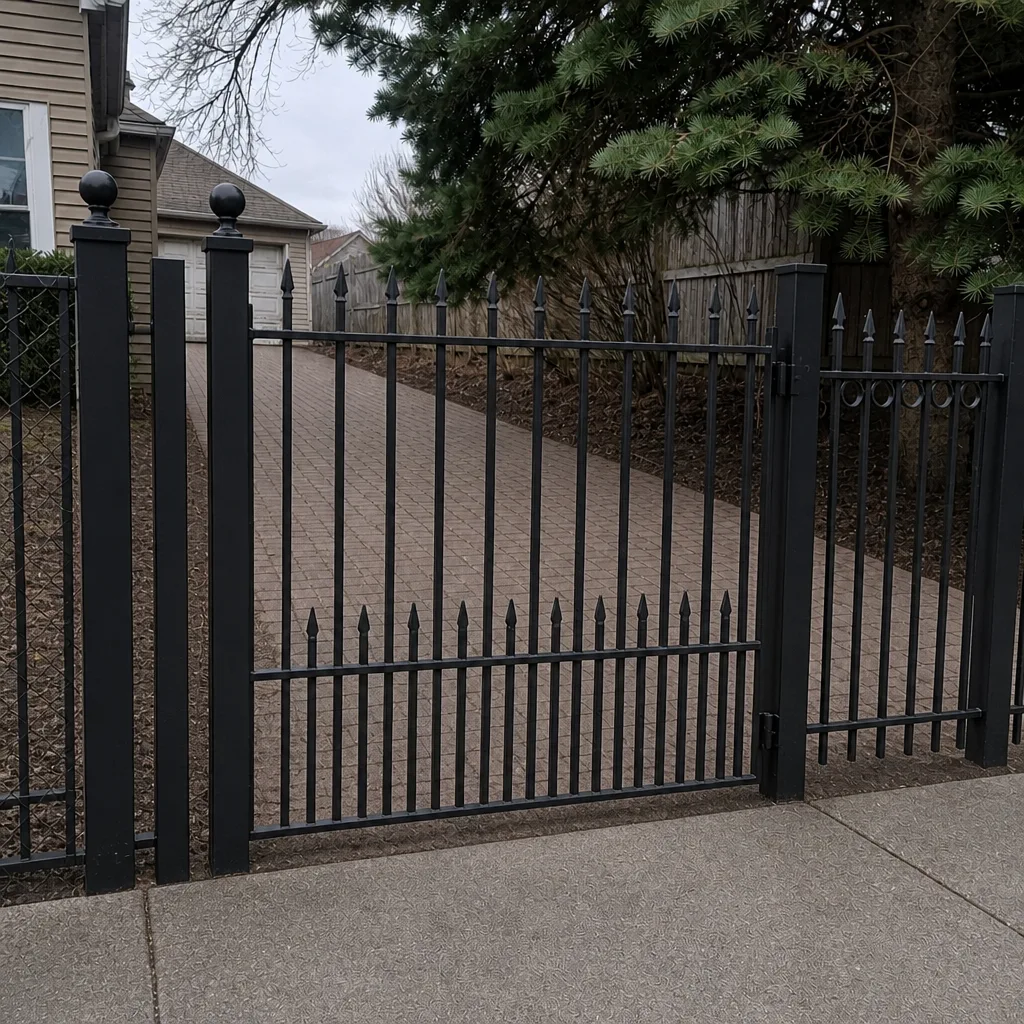
See the difference
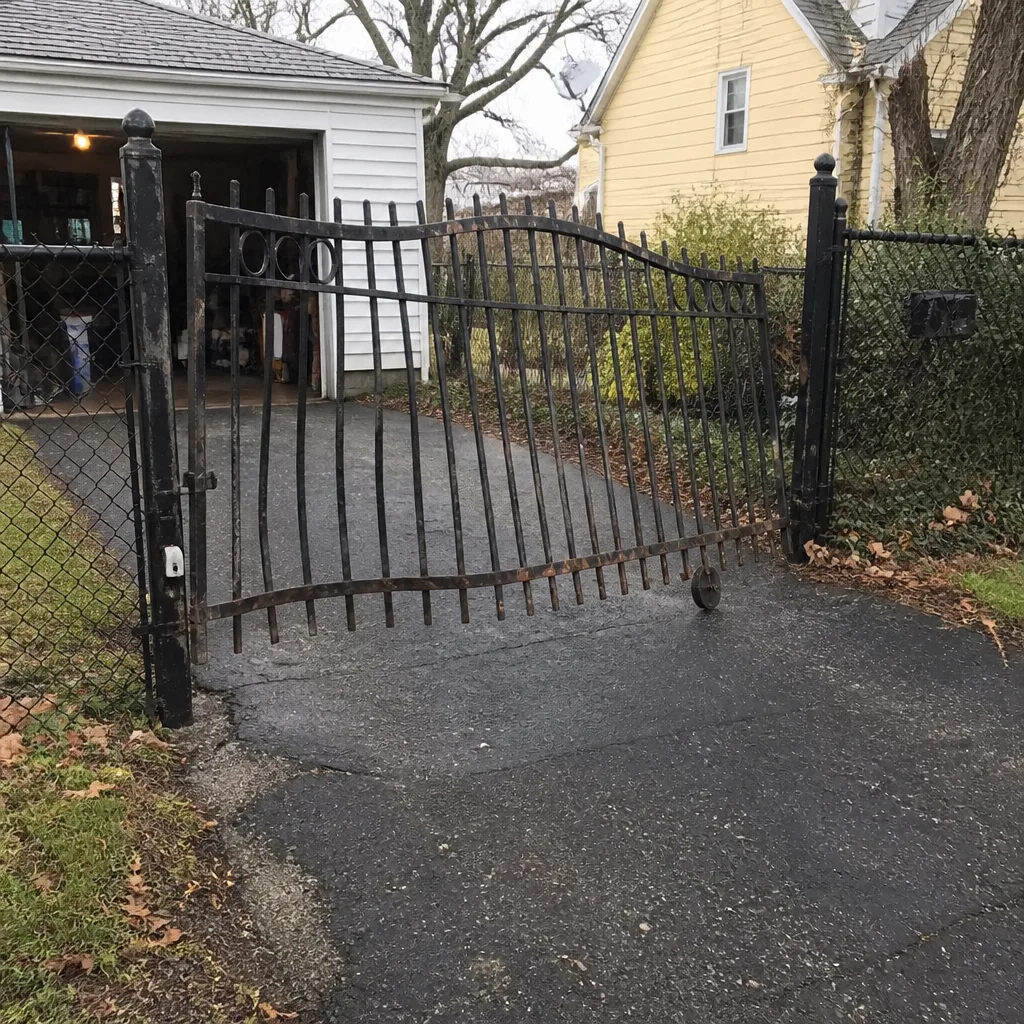 Before
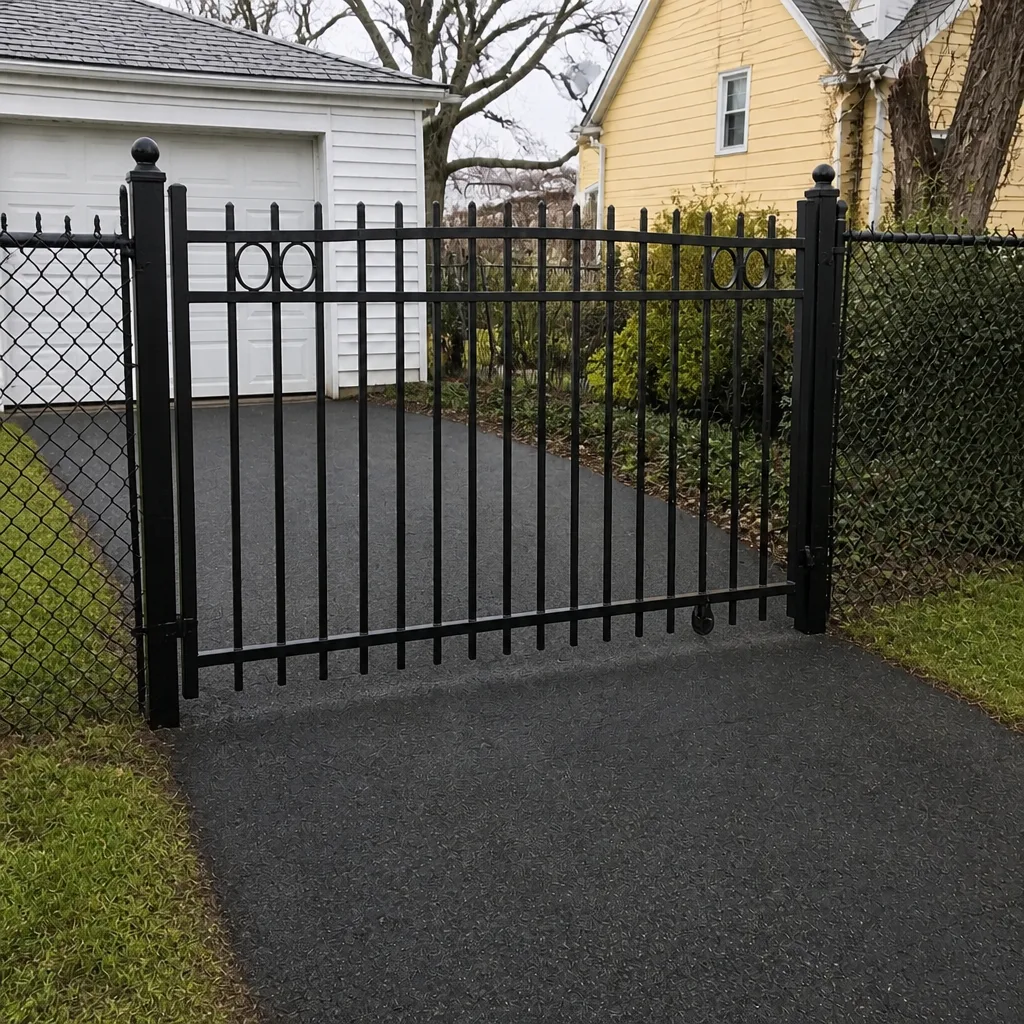 After
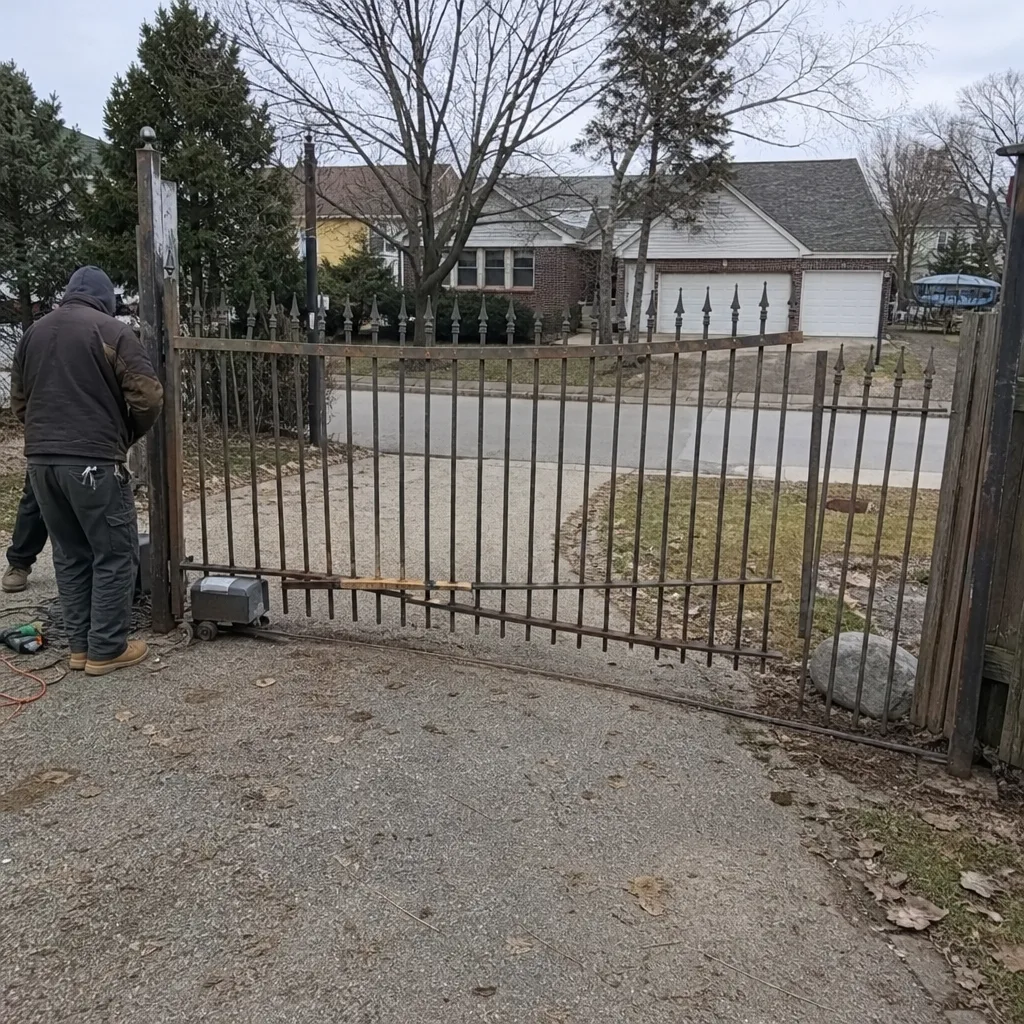 Before
 After
 Before
 After
When to Call a Professional
Call a professional when your gate won’t move, moves erratically, or shows any electrical or safety fault. Call when a heavy swing or slide panel is unstable, sagging, or off its track. Call when you don’t know your drive system and the symptoms point in several directions. And call when the safety sensors or edges aren’t working, because a gate that can’t detect an obstruction is a hazard. A free estimate lets you get a real diagnosis before you spend anything, and the price is quoted and agreed before any work starts. Gate Repair Aurora offers free estimates in Aurora. Call (866) 361-5021. We answer 24/7. Fast dispatch from 7am to 7pm, Sunday through Friday.
Frequently Asked Questions
Gate repair cost depends on the drive system, the component at fault, and whether parts are in stock, so we set the price per job with a written estimate after diagnosis. The written estimate sets the final price, and we quote and agree it before any work starts. Call (866) 361-5021 for a free estimate.
Many repairs can be same-day, though it depends on the fault and parts availability. We answer 24/7 and run fast dispatch from 7am to 7pm, Sunday through Friday. Call for an exact quote; estimates are free.
We work on LiftMaster, FAAC, BFT, Linear, Viking, Ghost Controls, DoorKing, Elite, and Mighty Mule across residential and commercial systems. If your brand is one of those, tell us at the call and we can point the diagnosis in the right direction. Call (866) 361-5021 for a free estimate.
Check your remote battery, note your drive system (hydraulic, electromechanical, or solar-assisted), and look for visible damage to the gate frame or track. Don’t touch the operator wiring or safety sensors. A little information on the call saves diagnostic time. Call (866) 361-5021 for a free estimate.
Most often it’s limit switch drift or obstacle sensor misalignment, two different repairs. A technician needs to test both to know which one applies. Call (866) 361-5021 for a free estimate.
Repairs usually don’t require a permit, but new installations and significant electrical changes often do. Always confirm with your city’s building department, since requirements vary. Call (866) 361-5021 for a free estimate.
The Bottom Line
Gate repair in Aurora comes down to reading the system correctly. Identify the drive type first, match symptoms to components, and check parts availability and hour-meter readings before choosing repair or replacement. Aurora’s freeze-thaw cycles punish underground actuators and control boxes alike, and residential and commercial gates fail for different reasons even when they look the same. Our technicians have up to 9 years of experience across nine major brands, from residential units to commercial heavy-cycle operators. When in doubt, call for a free estimate: the price is quoted and agreed before any work starts.
Written by the team at Gate Repair Aurora.