
Last updated November 16, 2026
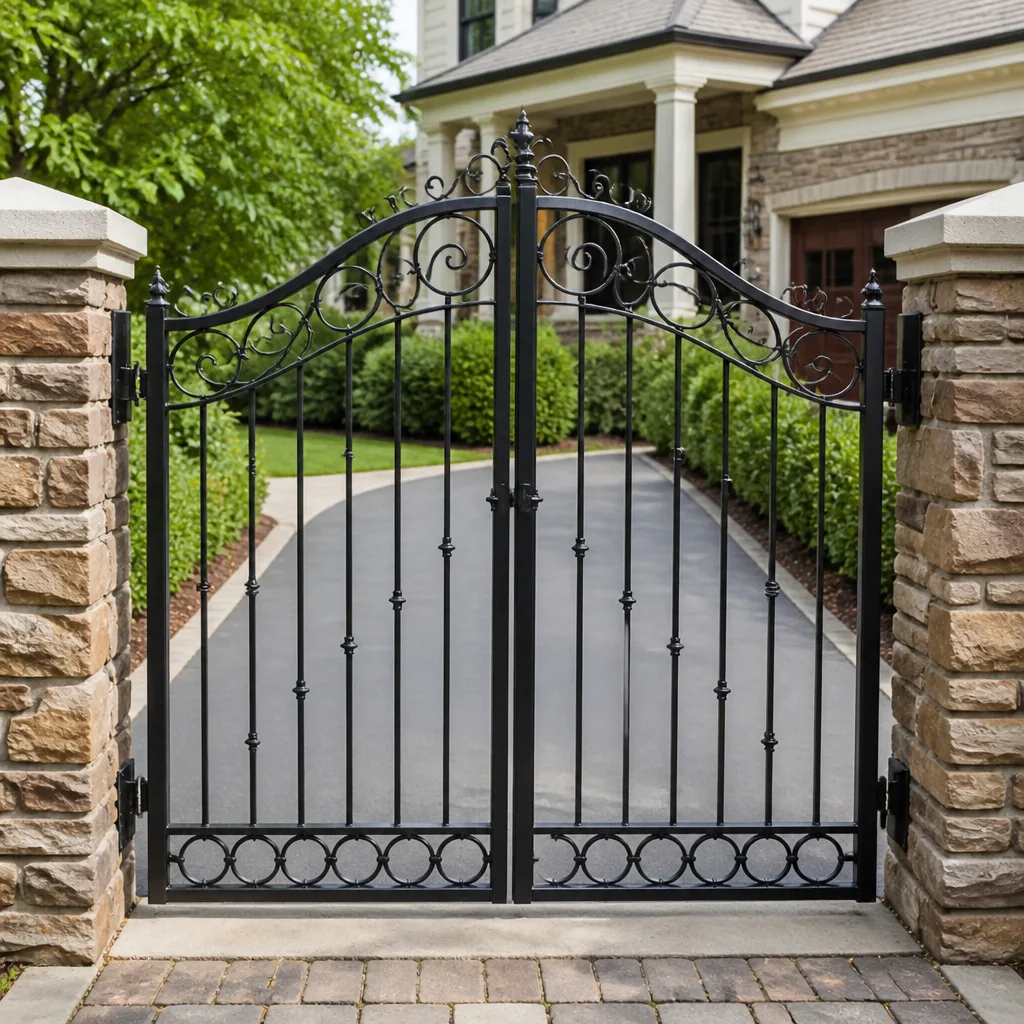 Wrought iron
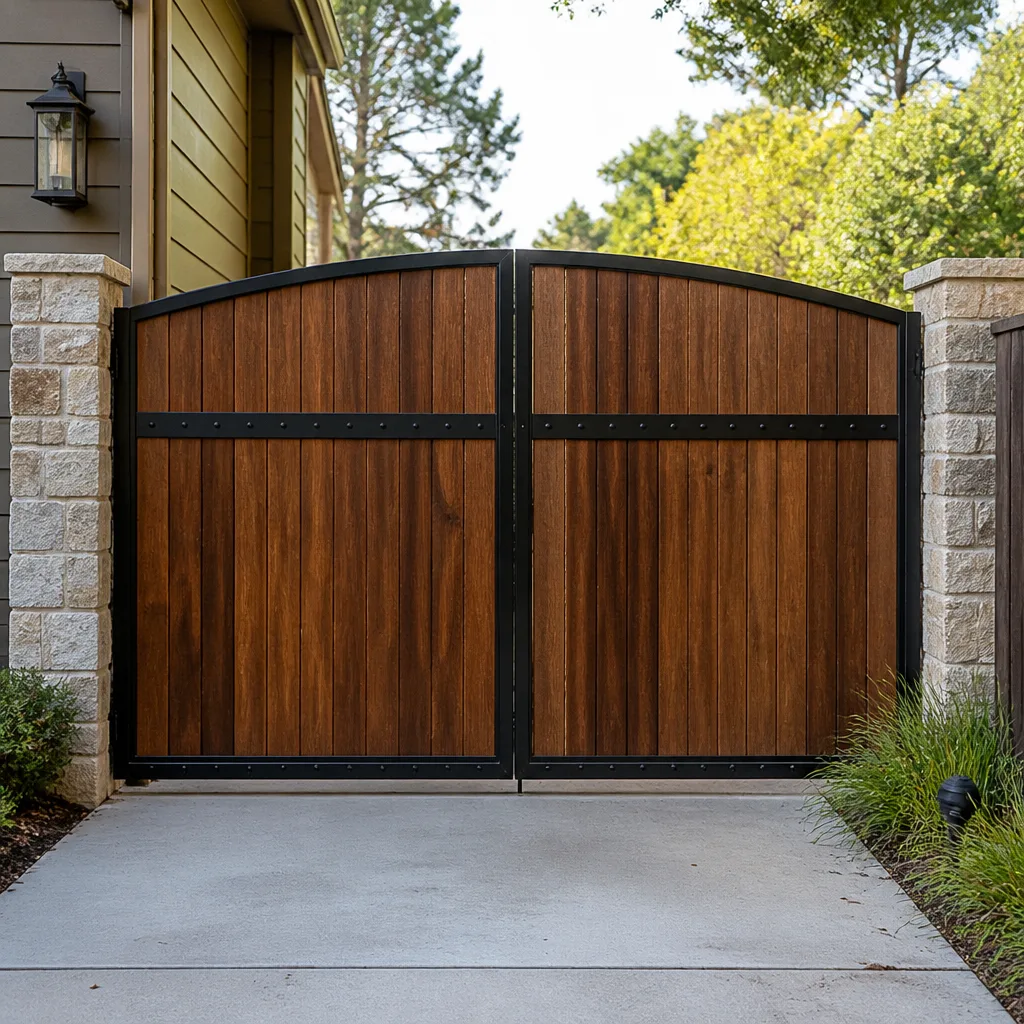 Wood & steel frame
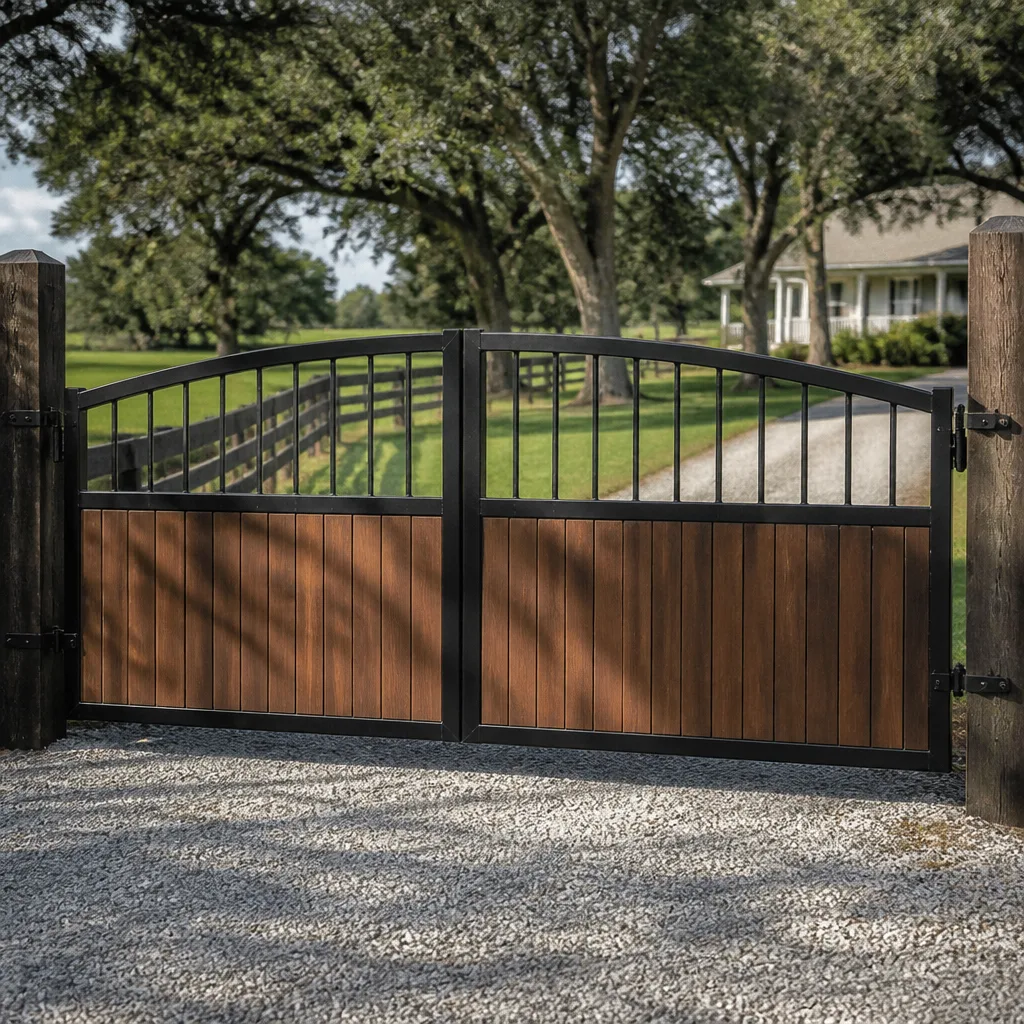 Farm & ranch
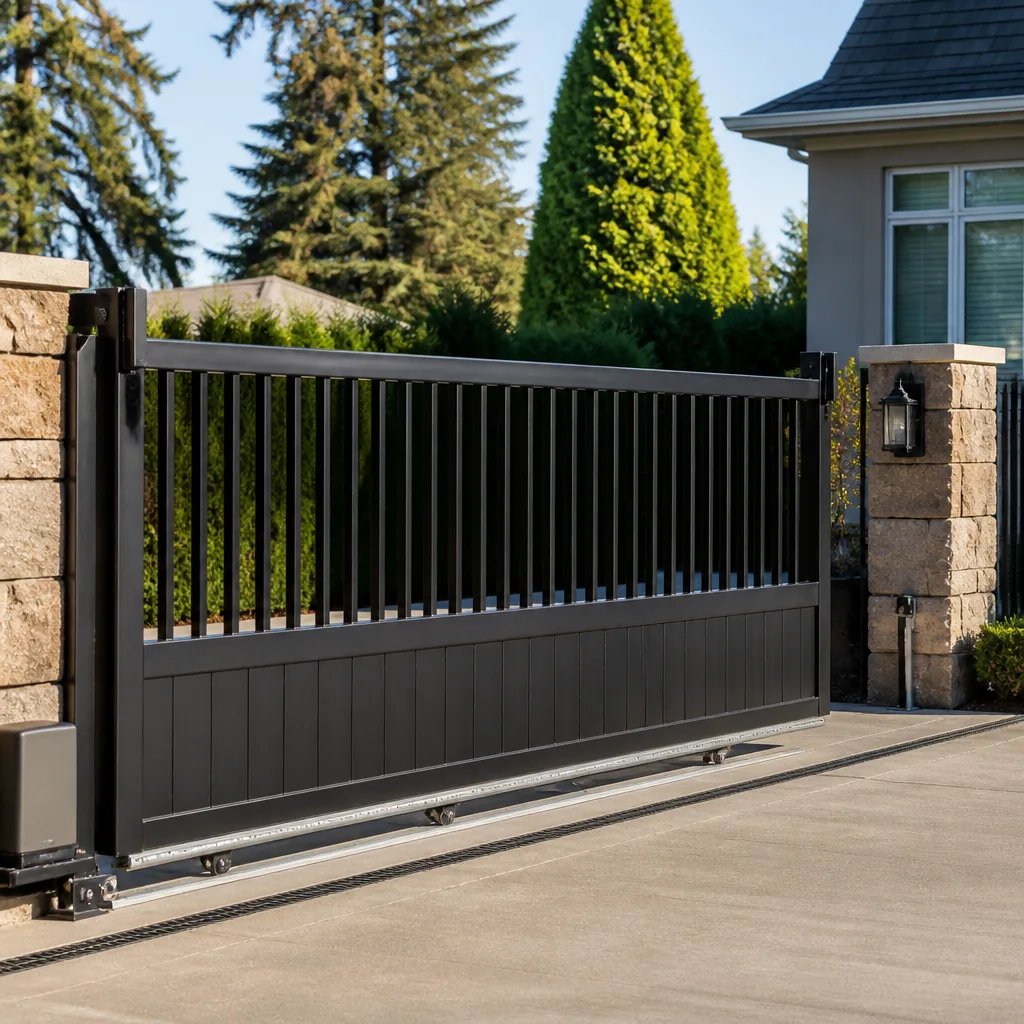 Sliding driveway gates
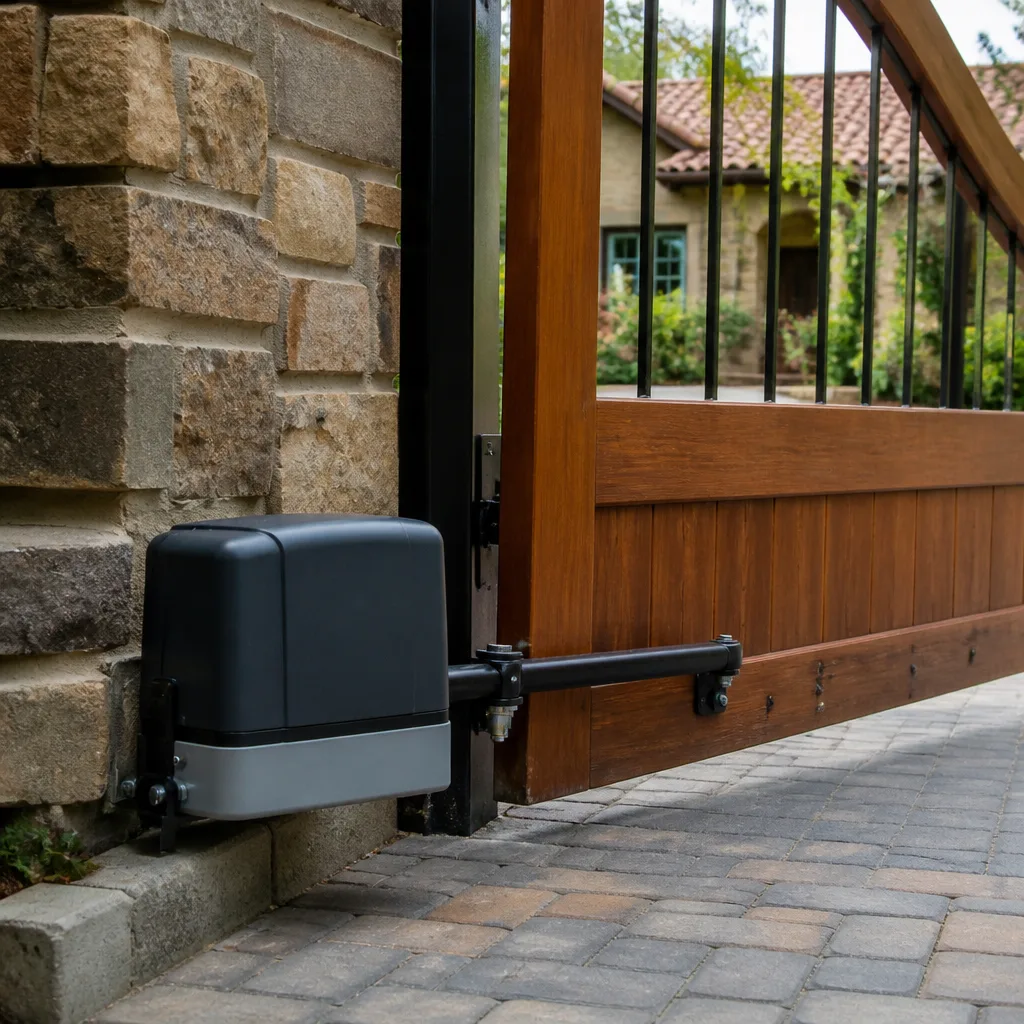 LiftMaster operators
Free on-site gate assessment - hinges, posts, and your LiftMaster or Nice gate operator checked before anything is quoted
The assessment is free and the quote is the invoice.
Get your free estimateHow to Hire a Gate Repair Contractor in Aurora: A Step-by-Step Guide
Ask any contractor one question before you book: “What gate brands are you factory-certified on?” The hesitation that follows tells you more than the answer. Most of the contractors advertised around Aurora are fencing generalists who handle gates as a side job, or single-brand dealers who’ll quietly steer you toward a full replacement when your system isn’t the brand they carry. Neither is set up to diagnose an operator fault on a LiftMaster board or a FAAC limit switch with real confidence. This guide walks you through a screening process that separates the specialists from the dabblers, step by step.
Quick Answer
To hire a gate repair contractor in Aurora, verify three things before anyone touches your gate: a current Illinois contractor license, hands-on service experience across multiple gate brands (not just the one they sell), and a written estimate issued after a real on-site visit. Require UL 325 safety compliance on any automated system. Ask whether your parts will be OEM or aftermarket, and get the answer in the bid. A specialist does all of this without being prompted; a generalist usually doesn’t.
Styles & brands we work with
- Wrought iron
- Wood & steel frame
- Farm & ranch
- Sliding driveway gates
- LiftMaster operators
Table of Contents
- Specialist vs. Generalist: Why It Matters in Aurora
- Gate Operator Certification vs. Electrical License: What Aurora Homeowners Need to Know
- How to Verify an Illinois Contractor’s License
- What Aurora Permit Rules Mean for Your Contractor
- UL 325 Compliance: The Question Most Homeowners Never Ask
- OEM vs. Aftermarket Parts and Your Warranty
- Red Flags in Gate Contractor Bids
- How to Read a Specialist’s Estimate vs. a Generalist’s
Specialist vs. Generalist: Why It Matters in Aurora
There’s no shortage of contractors in Aurora who will quote you a gate repair. Most of them are fencing companies. They pour posts, hang slats, and set gates, and when a job comes in with a control board problem or a misaligned limit switch, they’re troubleshooting outside their wheelhouse. That’s not a knock on fencing crews; it’s just where their training sits. A gate operator is a different specialty entirely.
A dedicated Gate Repair Aurora specialist works on gates every day. That focus matters for two reasons. First, you don’t spend the first hour of the visit paying a technician to learn your system. Second, brand-specific knowledge is real. Our technicians have up to 9 years of experience and have worked hands-on with LiftMaster, FAAC, BFT, Linear, Viking, Ghost Controls, DoorKing, Elite, and Mighty Mule operators. Residential systems like Mighty Mule and Ghost Controls are built for homeowner installs. Commercial operators like DoorKing and FAAC are rated for high-cycle traffic. Same visit, different diagnostic path.
In our experience, the frustration we hear most in Aurora is a homeowner who called around, got three bids, and couldn’t tell the specialist from the generalist because everyone used similar language. Here’s how to actually tell them apart:
- Ask what gate brands they service. A specialist can name specific operators, residential and commercial. A generalist usually says “we do all gates.”
- Ask how they diagnose operator faults. A real specialist describes testing the control board, checking the limit switches, and reading the operator’s own error codes. A generalist describes checking hinges and alignment.
- Ask about both repair and installation. A specialist can walk you through the repair-or-replace decision from a neutral starting point. A single-brand dealer can only install what they sell.
- Ask for their take on operator brands they don’t stock. If their answer is “we’d recommend you replace it with our brand,” you’ve found the dealer.
Some gate faults in Aurora turn out to be sensor issues, wiring problems, or operator settings. Others are structural. A specialist can tell the difference in the first visit and either get you back up and running or tell you plainly when the operator has reached end of life. A generalist often can’t. That difference shows up in the estimate, in the parts they recommend, and in how quickly you actually get resolution. For a breakdown that points to the operator itself, our electric gate repair team handles the diagnostic and the repair in one visit when the part is available.
Gate Operator Certification vs. Electrical License: What Aurora Homeowners Need to Know
Two very different credentials often get blurred together when you’re asking a contractor about their qualifications. An operator certification and a general electrical license are not the same thing. Understanding the distinction helps you ask the right question and read the answer accurately.
An operator certification (or “factory certification” in industry shorthand) is training on a specific brand’s gate operator systems. It covers installation specs, diagnostic procedures, board troubleshooting, and warranty procedures for that brand’s gear. Certifications are typically issued by the manufacturer and are brand-specific. Someone can be certified on LiftMaster and not on FAAC, or on DoorKing and not on Linear. That’s why asking which brands a contractor is certified on is a sharper question than asking “are you certified?”
A general electrical license (also called an electrical contractor license in Illinois) is issued by a state regulatory authority and covers the electrical work required to power a gate operator. It’s the credential that lets a contractor legally run conduit, install a dedicated circuit from the panel, and connect the operator’s power supply. It’s not the same as a general contractor’s license, and it’s not the same as a fence contractor’s license.
Why both matter for Aurora:
- Operator certification tells you the contractor knows your specific brand’s fault patterns and won’t damage the board during diagnosis. If your gate runs on a LiftMaster operator and the technician has never opened a LiftMaster, you may pay for their learning curve.
- Electrical licensing tells you the power side of the install or repair is being handled by someone legally able to do that work. Illinois takes electrical work seriously, and unlicensed wiring on a gate operator is both a code and a safety problem.
- The overlap is what a real gate specialist brings. They know the operator AND they know how to safely wire it, or they work with a licensed electrical partner when the scope requires it.
When you interview a contractor, ask both questions separately. “What gate brands are you certified on?” and “What’s your electrical license status?” If the answer to either involves a sidelong glance, keep calling. Dependable teams answer both without stress.
How to Verify an Illinois Contractor’s License
Illinois keeps contractor licensing records accessible to the public. Verifying that a gate repair contractor is licensed is fast, free, and the single highest-value step in this entire process. It takes about five minutes and it protects you from most of the bad outcomes we see in Aurora.
Here’s the process we recommend, in order:
- Ask the contractor for their license number in writing. Any reputable gate specialist will provide this without hesitation, usually in the first email or on the bid. If they deflect, that’s your answer.
- Look up the license on the Illinois Department of Financial and Professional Regulation (IDFPR) license lookup. The state maintains online verification tools for licensed trades. The lookup will tell you whether the license is active, what type it is, and whether there are any enforcement actions on file.
- Confirm the license covers the work you’re hiring for. An electrical contractor license covers electrical work. A general contractor license covers general contracting. A fence contractor license covers fencing. Gate operator work may require more than one license class depending on the scope, so ask.
- Check whether the license is current or expired. Expired licenses are common among contractors who are phased out of the trade. An expired license means no current bond, no current insurance backing, and potentially no legal standing if something goes wrong.
- Ask for a certificate of insurance showing general liability and workers’ comp. Insurance is separate from licensing. Licensing says the contractor is legally allowed to work; insurance says you’re covered if something on the job goes wrong. Ask the contractor to have their insurance carrier email you a certificate directly to your address; that prevents any chance of an edited PDF.
Be especially careful in Aurora with out-of-area contractors who advertise gate repair but are actually based outside Illinois. Their state license may not apply to Illinois work at all. If you’re working with a local Aurora specialist, the license should be an Illinois one. Simple to check, and worth checking.
What Aurora Permit Rules Mean for Your Contractor
Whether you need a permit for a gate repair or installation in Aurora depends on the scope. A straight repair (replacing a board, swapping a sensor, realigning a swing arm) usually doesn’t require a permit. A gate replacement or new installation often does, particularly where the electrical connection requires a new dedicated circuit or where the new gate changes the static geometry of the property (height, setback, or lot-line position).
Some cities also regulate driveway gate placement and sight-line clearance around driveways and intersections for traffic safety. Aurora, like most municipalities, has development codes covering fence and gate height limits, property line setbacks, and visibility clearances at driveways. If your gate is being replaced or newly installed, the contractor should be able to tell you which parts of the work require permits and which don’t, without guessing.
A contractor who says “we don’t bother with permits” or “you don’t need one” without knowing the scope is a problem. Here’s what to expect from a contractor who takes permits seriously:
- They ask upfront whether the work is a repair or a replacement. Scope changes permit needs.
- They know the difference between a repair (usually no permit) and a replacement that alters height, width, or position (often needs a permit).
- They tell you who pulls the permit and who pays for it. In most residential cases, the contractor pulls the permit and passes the cost to the homeowner in the estimate; on some projects the homeowner pulls it. Either can be fine as long as it’s spelled out.
- They know the local electrical inspector will want to review wiring at final inspection when a permit is pulled for the electrical scope.
- They don’t treat permits as paperwork to skip. A contractor who cuts corners on permitting will cut corners elsewhere.
If you’re unsure whether your specific project needs a permit, the safest step is to call the City of Aurora’s building department directly and describe the scope. Ten minutes on the phone with the city tells you what to expect from your contractor. And, honestly, you can learn a lot about a contractor by asking them this question and seeing whether their answer aligns with the city’s. If you want help understanding the scope before you call the city, contact us and we’ll walk you through what’s typical for Aurora gate projects.
UL 325 Compliance: The Question Most Homeowners Never Ask
UL 325 is the safety standard that governs automatic gate operators in the United States. It covers the safety devices that prevent a gate from closing on a person, pet, or vehicle: photoelectric sensors, reversing edges, and other entrapment protection. The standard has been updated over the years, and current compliance requires two independent means of entrapment protection on most automated sliding and swing gates, plus proper signage on the gate itself.
Why this matters for your Aurora gate: a gate that isn’t UL 325 compliant is a genuine safety risk, not just a code technicality. It’s also a liability issue for property owners, particularly HOAs and commercial sites. When a gate that lacks proper entrapment protection injures someone, the property owner and the contractor who installed or serviced it can both end up facing serious legal exposure.
Here’s how to raise the question with a contractor without sounding like you’re learning on the job:
- “Is my current gate UL 325 compliant?” Any specialist can answer this after looking at the gate. A generalist often can’t.
- “If it’s not compliant, what’s missing?” The answer should include specific devices: sensors, edges, or signage.
- “Will your repair restore compliance?” If the repair leaves the gate non-compliant, that’s a conversation to have before work starts, not after.
- “What entrapment protection devices do you recommend for my operator?” Different operators (LiftMaster, FAAC, DoorKing) have different compatible devices. A specialist knows which ones pair with your brand.
UL 325 compliance is a moving target because the standard has been revised several times. A gate installed in the 2000s may not meet the current version. That doesn’t mean it’s automatically unsafe; it means the owner should know the gap and have a plan. A specialist flags this during the estimate. A generalist either doesn’t know or doesn’t mention it.
OEM vs. Aftermarket Parts and Your Warranty
When your gate operator needs a new control board, sensor, receiver, or motor assembly, the contractor’s choice of part matters for the long run. OEM (original equipment manufacturer) parts are made by the brand that built your operator. Aftermarket parts are third-party alternatives, often cheaper, sometimes functionally identical, sometimes not.
Both have their place. OEM parts carry the brand’s warranty and are engineered to the operator’s exact spec. Aftermarket parts can get a gate back up and running when an OEM part is unavailable or where cost is the deciding factor. The problem isn’t aftermarket parts existing; it’s a contractor who doesn’t disclose which they’re using, and doesn’t explain the trade-off.
Here’s what to know:
- Ask explicitly. “Will this repair use OEM parts?” is a fair question on any estimate over a few hundred dollars. If the contractor can’t answer, they haven’t decided yet, and you’ll find out when the bill lands.
- Understand the warranty impact. Some operator brands void or limit their warranty when aftermarket parts are installed. Others don’t. The brand’s own documentation will say. If the contractor isn’t sure, ask them to put their warranty position in writing.
- Know when aftermarket makes sense. On a very old operator that’s near end of life, an inexpensive aftermarket part can buy you time without much downside. On a newer operator under warranty, aftermarket typically doesn’t make sense unless it’s the only option.
- Match the part to the operator. A LiftMaster receiver is not the same as a FAAC receiver, and a BFT board is not interchangeable with a Linear board. “Universal” parts exist but they rarely behave like the real thing. A specialist will tell you this; a generalist may not know it.
In our experience, the single biggest warranty headache we see in Aurora is homeowners who had a repair done by a generalist, then tried to make a warranty claim on their operator, and discovered the aftermarket part voided coverage. That’s a fixable situation but not a pleasant one. Ask the question before the work, not after.
Red Flags in Gate Contractor Bids
Once you’ve done the pre-screening and you’re collecting bids, the bids themselves will tell you a lot. Most bad experiences start with a bid that was never going to go well. Here are the red flags to watch for in Aurora gate repair bids specifically:
- Quotes without a site visit. Some contractors quote gate repair over the phone. There are edge cases where this is workable (a known part failure with the model number confirmed), but generally, a gate that hasn’t been walked isn’t a gate that’s been diagnosed. A number over the phone is a guess with a price tag.
- Unrealistically fast turnaround promises. “We’ll have it fixed tomorrow” without ever seeing the gate, without knowing whether the part is in stock, is one of the most common red flags. Real timelines depend on the diagnosis and the part. A specialist gives you a realistic window, not a fantasy one.
- No mention of UL 325 anywhere. If a bid doesn’t acknowledge entrapment protection, reversing devices, or signage, the contractor either doesn’t know the standard or doesn’t think it matters. Both are disqualifying on an automated gate.
- Recommendation of full replacement on the first visit without a diagnostic. Replacement is sometimes the right answer. But a specialist diagnoses first. A dealer who recommends replacement before opening the operator box is selling you a system, not fixing one.
- Sketchy parts sourcing language. “We’ll use what we have on hand,” “we use the best available,” or “we source from a wide network” without specifics means you’ll see aftermarket without knowing it. Ask for the part number, brand, and OEM/aftermarket status in the bid.
- Reluctance to put anything in writing. Estimates, warranties, and scope should be written. Verbal estimates are usually the wrong kind.
- No reference to permits. A bid for a replacement that doesn’t mention permits is a bid that’s likely planning to skip them. You’ll pay the difference at inspection time.
- Suspiciously low bids. A bid that’s dramatically lower than every other bid may reflect aftermarket parts, no permit, no UL 325 devices, or no licensed crew. Low isn’t always wrong, but ask what’s low about it before you sign.
- Zero conversation about the operator brand. If your operator’s brand never comes up in the bid, that’s a tell. A specialist will mention it because it drives parts, diagnosis, and warranty.
- Pushing a brand you don’t currently have. If their recommendation is “switch to [brand we sell],” that’s a sales pitch. If their recommendation is “your current [brand] operator can be repaired or replaced, here are the trade-offs,” that’s a diagnosis.
None of these on their own disqualifies a contractor completely. But two or three together mean you should keep calling. In Aurora we’ve seen the pattern play out enough to know that the homeowner who ignores two of these flags usually calls a specialist next time anyway. Save the trip.
How to Read a Specialist’s Estimate vs. a Generalist’s
An estimate is a document. It says what it says, and the differences between a specialist’s estimate and a generalist’s show up in the details. Here’s a side-by-side on the line items you should expect from each:
| Estimate Line Item | Specialist | Generalist |
|---|---|---|
| Diagnostic findings | Specific operator brand, model, and reported fault with test results | Often describes the gate’s visible symptom only (“won’t close”) |
| Parts specified | Part number, brand, OEM or aftermarket status, warranty | Often vague (“control board replacement”) |
| UL 325 devices | Listed, with current compliance status noted | Typically absent unless asked |
| Permit handling | Named as required or not, with cost line | Often not mentioned |
| Warranty on labor | Stated in writing, typically on the specific repair | Often “ask us” or verbal only |
| Scope language | Repair-or-replace options with pricing on both | Often only one option presented |
| Wiring and electrical scope | Named separately, with license class noted | Often buried or omitted |
| Estimated timeline | Realistic, based on diagnosis and part availability | Often a promise, not a plan |
The estimate is where you can tell whether the contractor thought about your specific gate or just templated a number. A specialist’s estimate names your operator brand. It says what was actually wrong. It splits parts and labor. It lists what safety devices were checked. It says whether the work is permitted. It gives you a written warranty stance. If you’re looking at an estimate that has none of those things, you’re looking at a bid that will require follow-up calls and probably follow-up bills.
You also want the estimate to spell out what happens to the price if the diagnosis uncovers something unexpected. Sometimes once the operator is open, a second fault shows up. A specialist tells you this upfront: “if we find an additional fault, we’ll pause and re-quote before proceeding.” A generalist orders the part, installs it, and hands you the surprise as an invoice line.
Ask this question of any contractor: “What’s your process if the repair reveals something else?” The right answer is a pause, a call, and a new written number. The wrong answer is “we’ll just fix it and let you know.” One is a contract; the other is a blank check.
Common Mistakes to Avoid
Having walked through hundreds of Aurora gate conversations, here are the missteps we see most often. Each is easy to avoid with a little preparation.
- Hiring the first contractor who answers the phone. Gate repair in Aurora has plenty of generalists advertising gate services. Slow down enough to ask the brand question before booking the visit. It takes ten minutes and saves hours.
- Skipping the license check. Illinois licensing records are public. Five minutes on the IDFPR lookup is the cheapest insurance you can buy against a botched repair or a warranty void.
- Choosing by price alone. The cheapest estimate in Aurora usually reflects missing scope: no UL 325 devices, no permit, aftermarket parts, no labor warranty. The number isn’t low; it’s incomplete.
- Not asking about the brand. If you know your operator is a LiftMaster and the contractor can’t tell you the difference between a LiftMaster board and a FAAC board, you’ve just discovered the level of expertise you’re paying for.
- Accepting a phone estimate on a complex repair. Simple, single-part failures sometimes justify a phone estimate. But any control board, motor, or wiring diagnosis needs eyes on the gate. If they’ll quote without a visit, they’re guessing.
- Ignoring the UL 325 question. An automated gate without proper entrapment protection is a legitimately dangerous piece of equipment. Not asking is the same as accepting whatever the contractor decides. Ask.
- Not getting a written warranty on the repair. Parts warranties vary; labor warranties vary. Get both on paper. The gate repair should come with a stated warranty period, and if it doesn’t, that’s the deal you’re accepting.
- Assuming a general fencing contractor covers gate electrical. Many fencing crews don’t hold the electrical license needed for operator wiring. Confirm the electrical scope is covered or subbed to a licensed electrician before the crew shows up.
Every one of these mistakes has the same underlying pattern: the homeowner didn’t ask the question because the contractor didn’t offer the answer. A real specialist offers the answers before you ask them. That’s the tell.
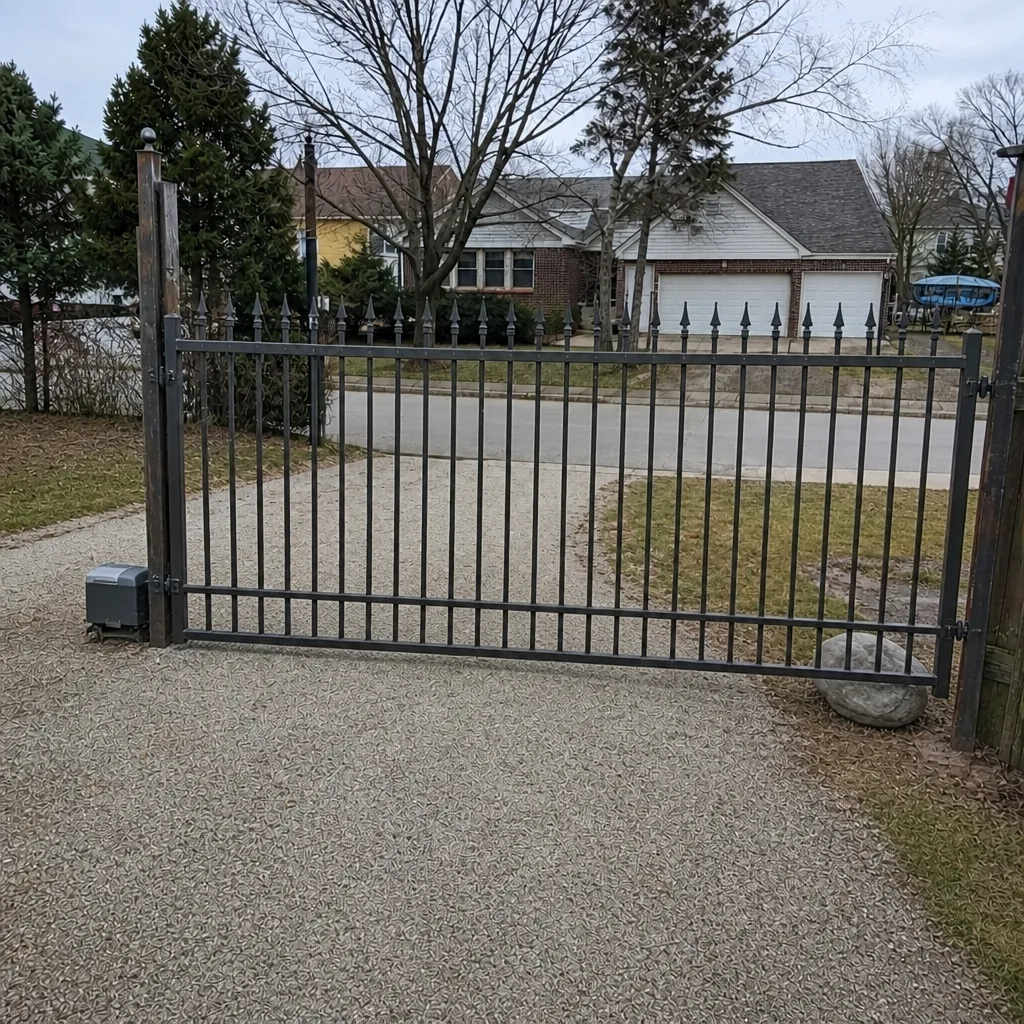
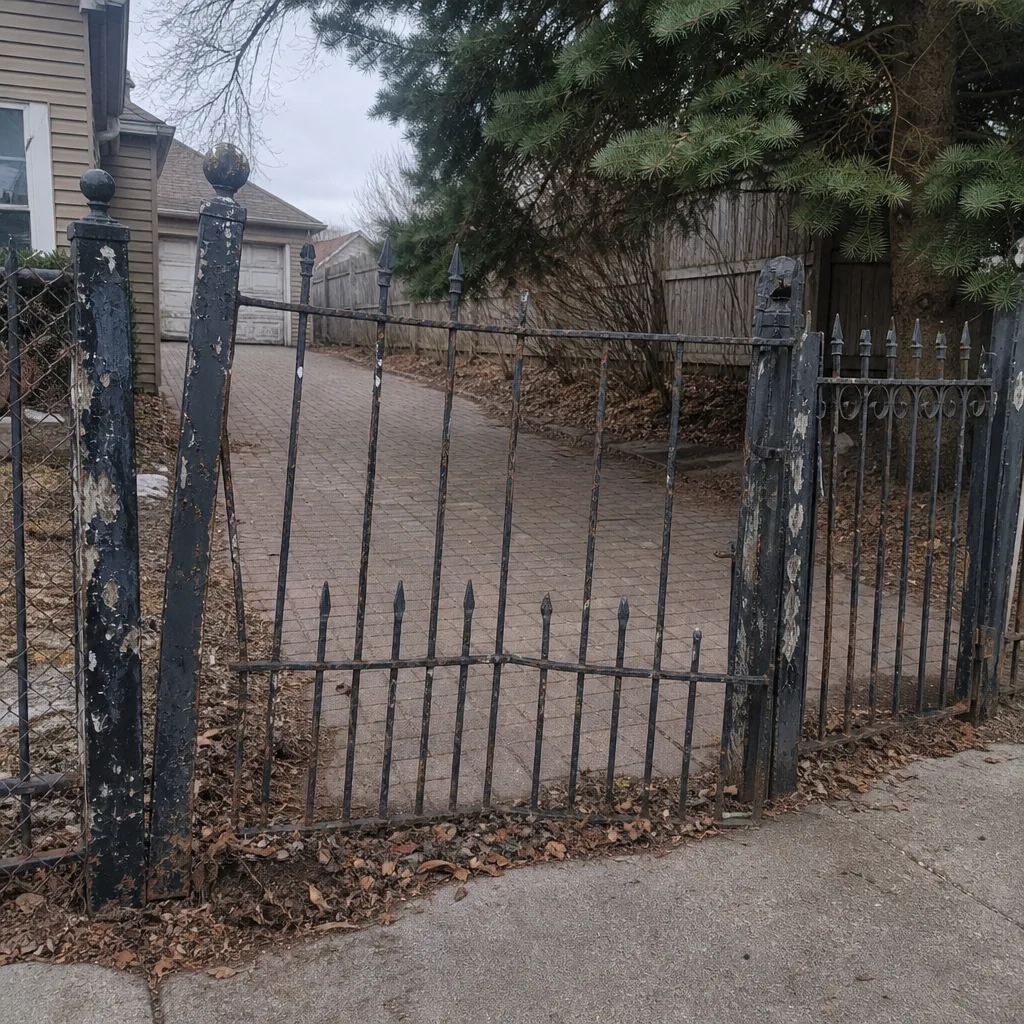
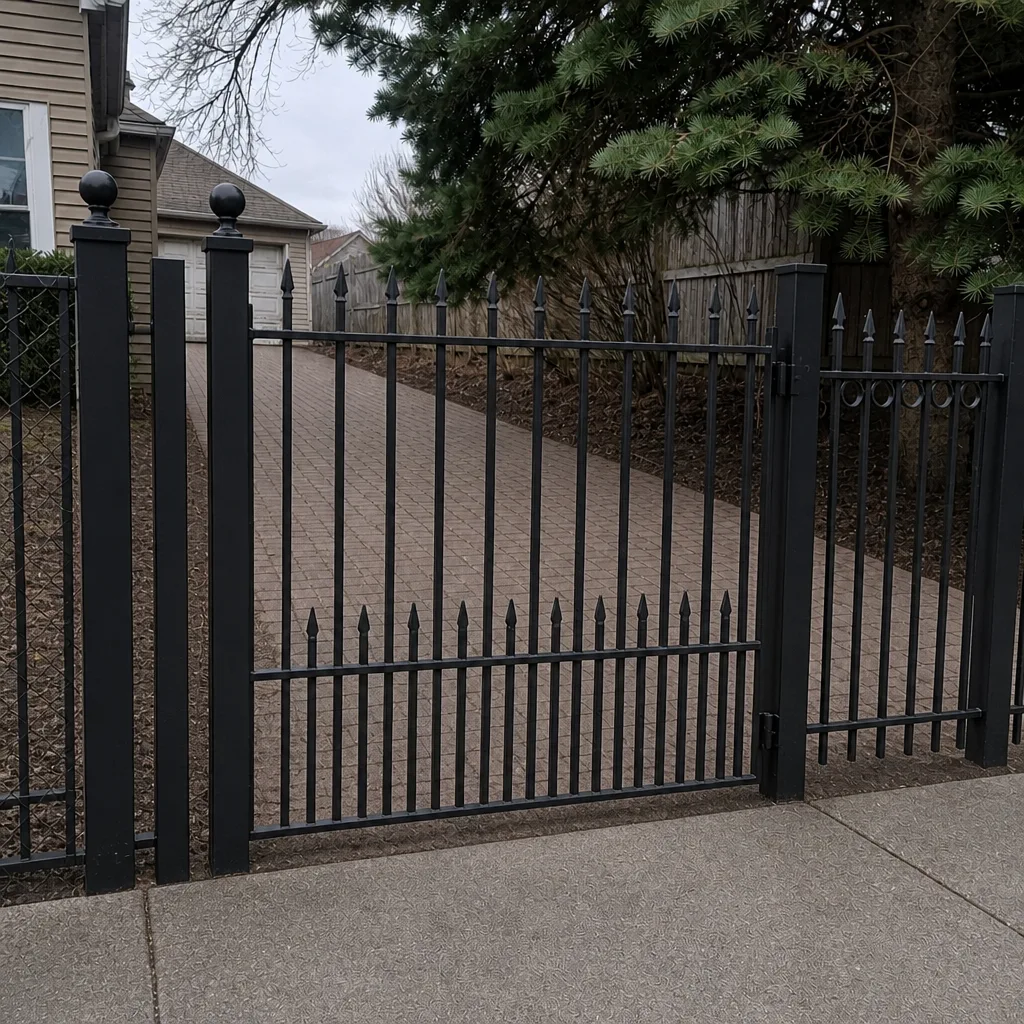
See the difference
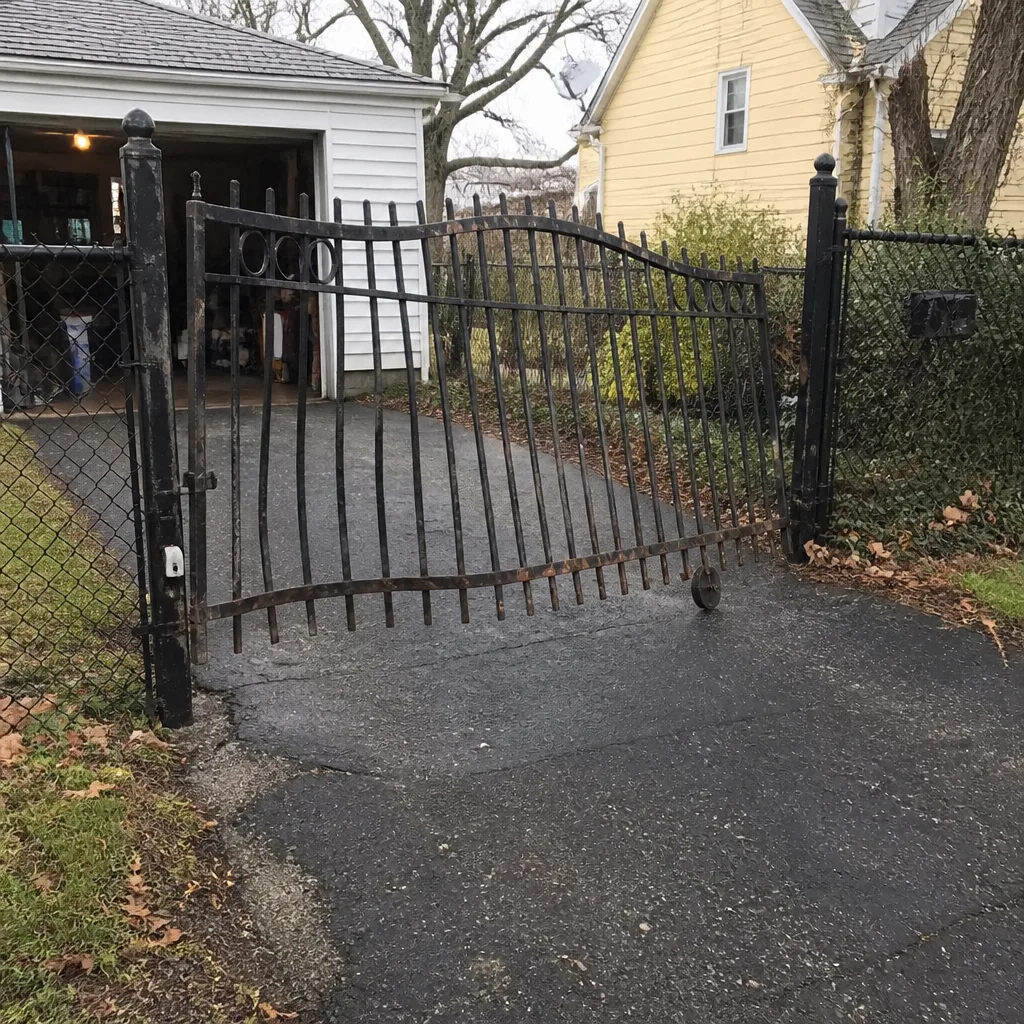 Before
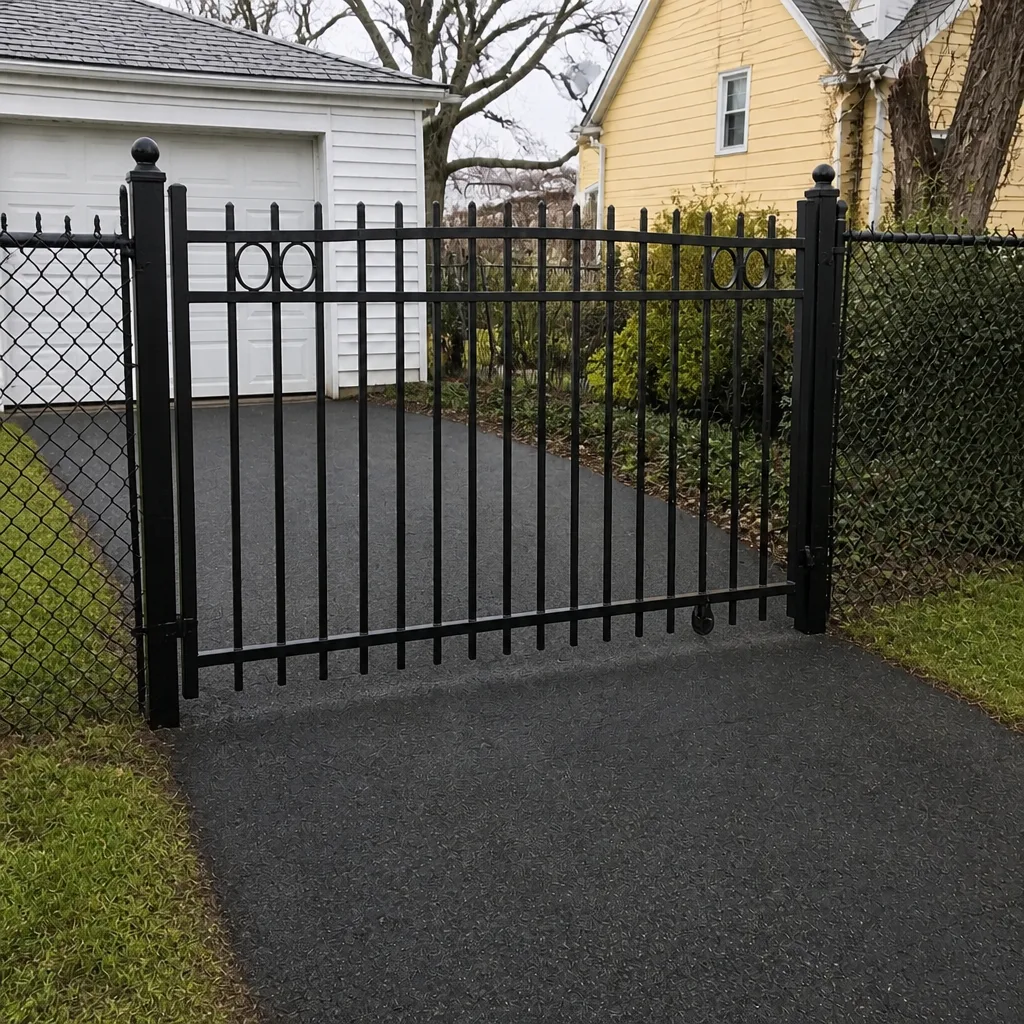 After
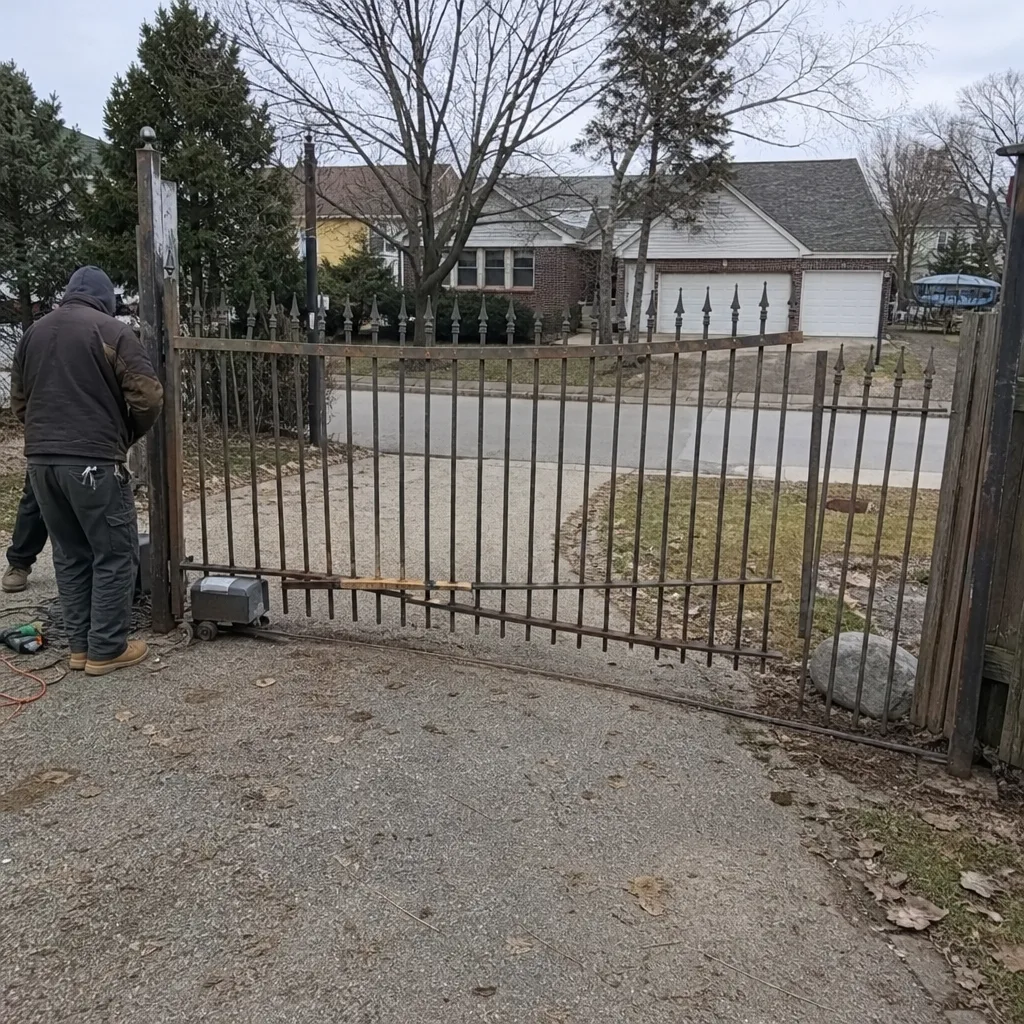 Before
 After
 Before
 After
When to Call a Professional
Some gate issues are genuinely repair-it-yourself territory: a remote that needs reprogramming, a new battery in the transmitter, a photo-eye lens that’s fogged over. But most fault conditions on an automated gate belong in the hands of a trained technician. Call a professional if your gate won’t open or close at all, if the operator has stopped responding to the remote, if the gate reverses unexpectedly during closing, if the motor runs but the gate doesn’t move, if you see frayed wiring, if the operator makes grinding or clicking noises it didn’t make before, if the gate has come off its track or swing arm, or if any safety reversing device has failed to stop the gate during a test. High-tension components, electrical wiring, and heavy gate panels can cause serious injury; a trained technician is the right call on all of them. Gate Repair Aurora offers free estimates in Aurora, so call (866) 361-5021. We answer 24/7. Fast dispatch from 7am to 7pm, Sunday through Friday.
Frequently Asked Questions
Look for three things: a current Illinois contractor license (verifiable on the IDFPR lookup), service experience across multiple gate operator brands (not just one), and a written estimate issued after an on-site visit. Ask specifically which brands they’re certified on. A specialist answers with names; a generalist hedges. Call (866) 361-5021 if you’d like us to walk you through what to expect.
Illinois electrical code generally requires a licensed electrical contractor for new dedicated circuits and hard-wired operator connections. A gate specialty contractor either holds that electrical license or works with a licensed electrical partner. Ask explicitly who will perform the electrical connection and under what license. If the answer is vague, keep calling.
An operator certification is brand-specific training on a particular gate operator’s installation and diagnostic procedures. An electrical license is a state credential covering the electrical work to power the operator. Both matter for Aurora gate work, and a real specialist can describe both without confusion.
UL 325 is the safety standard covering automated gate entrapment protection. It requires photoelectric sensors, reversing edges, or other entrapment devices on most automated sliding and swing gates. A gate that isn’t compliant is a real injury risk and a liability concern for property owners. Ask your contractor directly whether your current gate meets UL 325 and what’s missing if it doesn’t.
We work on LiftMaster, FAAC, BFT, Linear, Viking, Ghost Controls, DoorKing, Elite, and Mighty Mule operators, residential and commercial. We’re independent, not a dealer for any brand, so our recommendation between repair and replacement is based on the condition of your operator, not on what we sell. Call (866) 361-5021 for a free estimate on your brand.
OEM parts carry the operator brand’s warranty and are engineered to spec. Aftermarket parts can be cheaper and can make sense on older operators near end of life. What matters is that the contractor discloses which they’re using and explains the warranty impact in writing. Ask before the work starts, not after.
Watch for quotes issued without a site visit, no mention of UL 325 devices, vague parts language, no permit discussion, or a recommendation to replace the operator without a diagnostic first. Any two of those together is a sign to look elsewhere. We’ve seen the pattern repeatedly across Aurora; it’s usually clearer once you know what to look for. Call us if you want a second opinion on a bid you’ve received.
Yes. We handle repair and full installation as a single service. If your operator can be fixed, we fix it. If it needs to be replaced or upgraded, we quote that with the same team. You won’t need a separate contractor mid-project. Reach out at (866) 361-5021 for a free estimate on either.
The Bottom Line
Hiring a gate repair contractor in Aurora comes down to a handful of screening questions most homeowners never think to ask. Confirm Illinois license status. Ask what gate brands the contractor actually services and is certified on. Require a written estimate issued after a site visit. Insist on UL 325 compliance discussion. Get the OEM vs. aftermarket decision in writing. Read the bid for what it doesn’t say as carefully as for what it does. A true gate specialty contractor will answer all of this without being pushed. A fencing generalist or a single-brand dealer usually won’t. The five-minute IDFPR check, the brand question, and the UL 325 conversation are the three moves that separate a good hire from a bad one.
If you’re ready to skip the screening process and talk to a specialist who works on your brand, call (866) 361-5021 for a free estimate anywhere in Aurora. We answer 24/7. Fast dispatch from 7am to 7pm, Sunday through Friday. Our technicians have up to 9 years of experience, and we’re set up for both repair and replacement depending on what your gate actually needs. Whether your operator is a LiftMaster, a FAAC, a BFT, or another brand, we’ll diagnose it correctly and quote you in writing before any work starts. That’s the standard we think Aurora homeowners should expect from anyone they hire. Call today to get scheduled.
Written by the team at Gate Repair Aurora.