
Last updated November 16, 2026
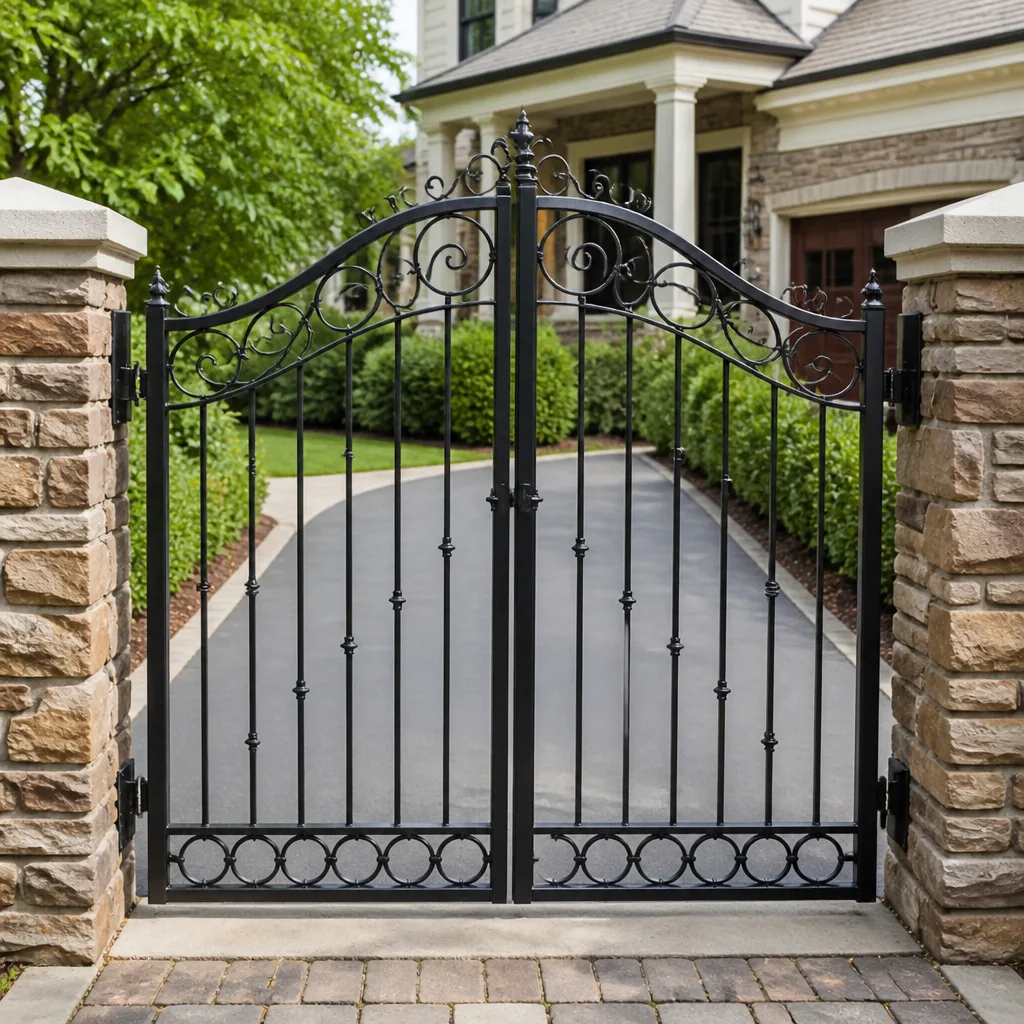 Wrought iron
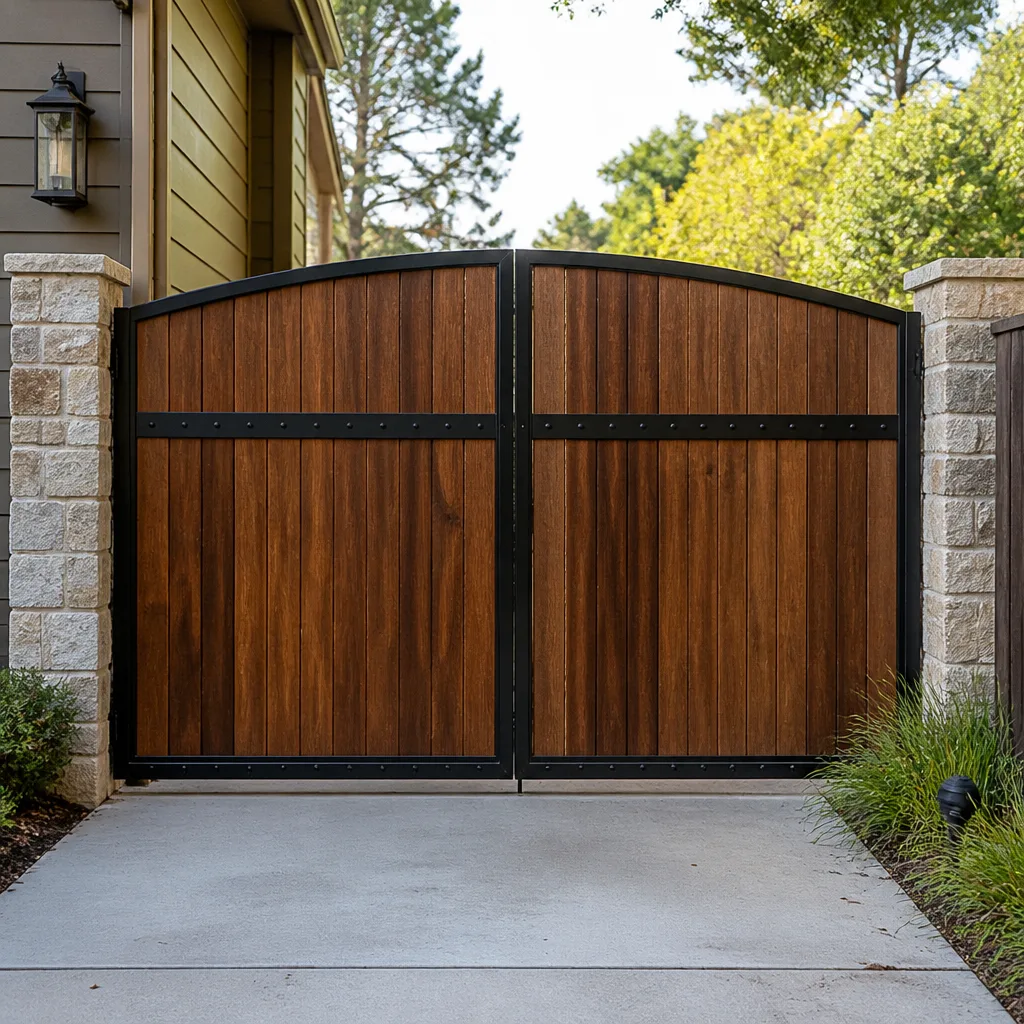 Wood & steel frame
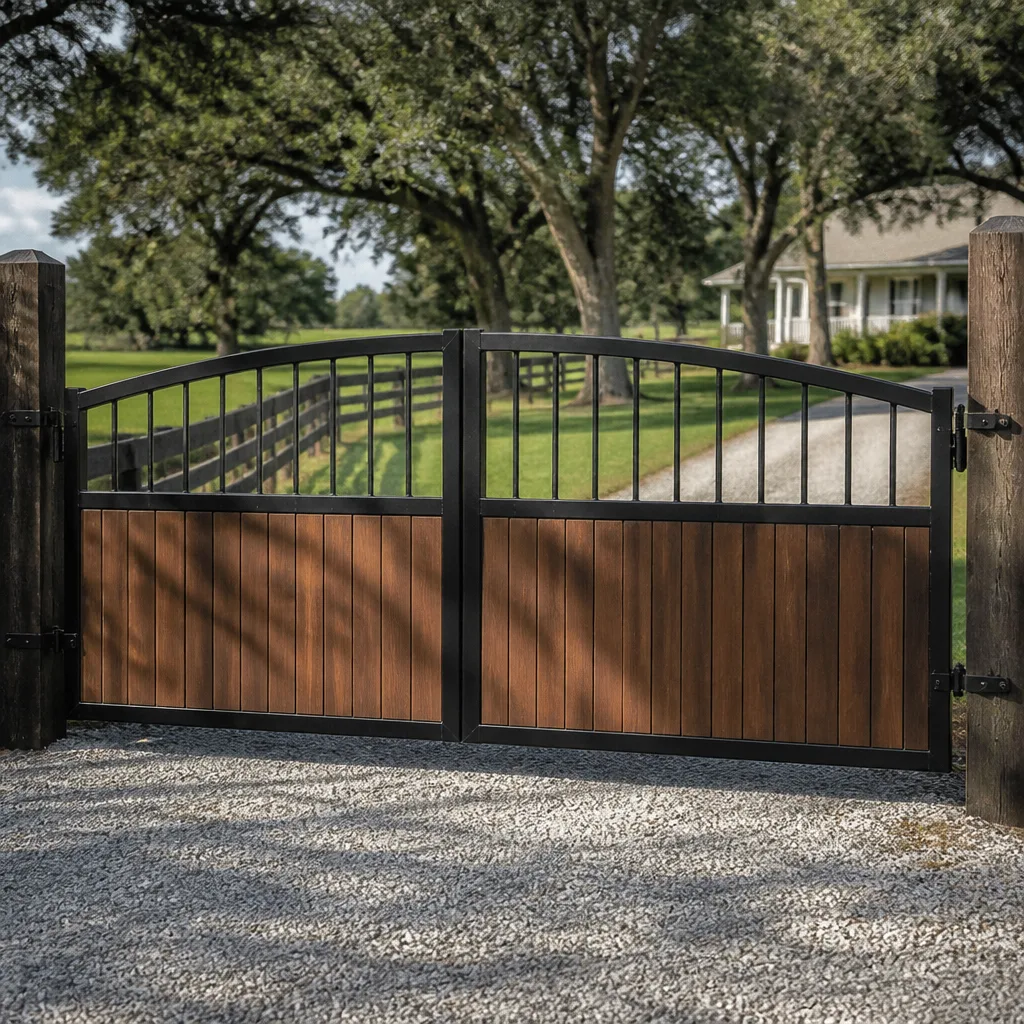 Farm & ranch
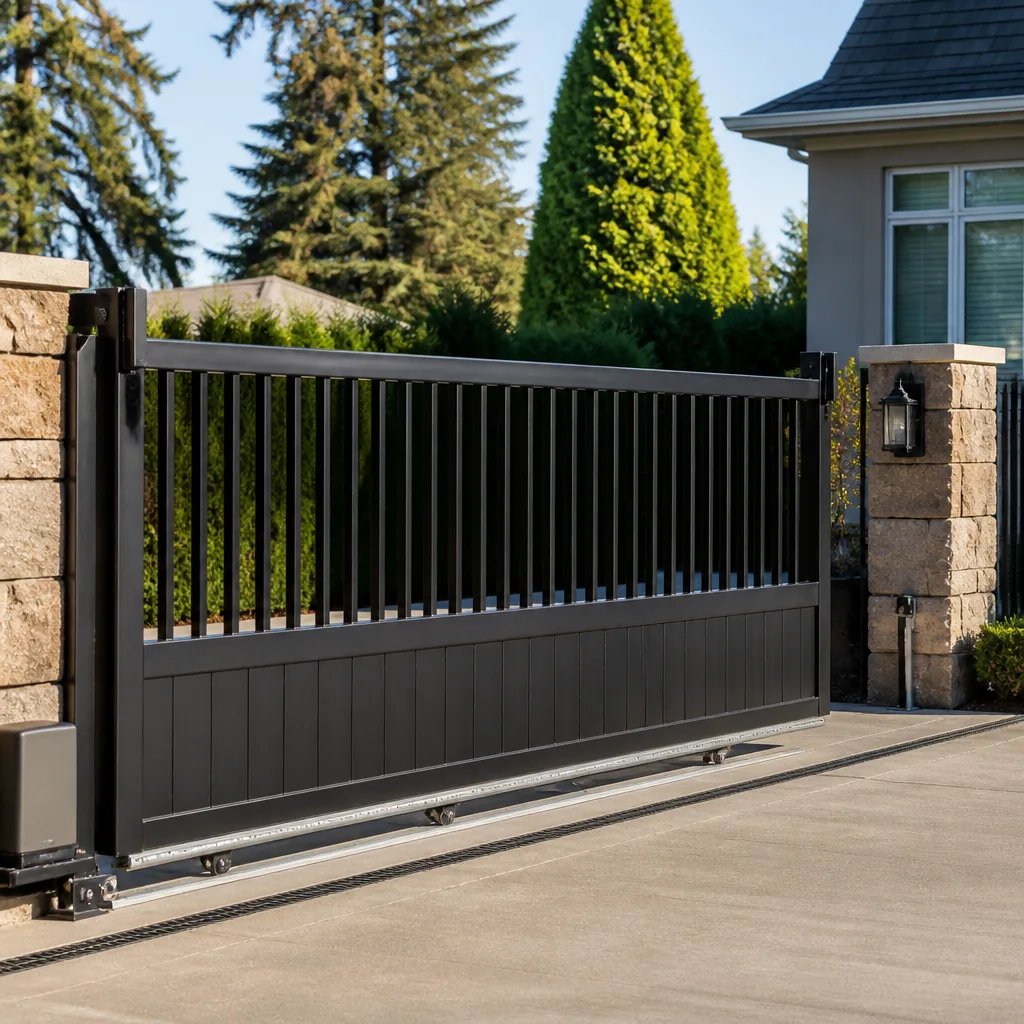 Sliding driveway gates
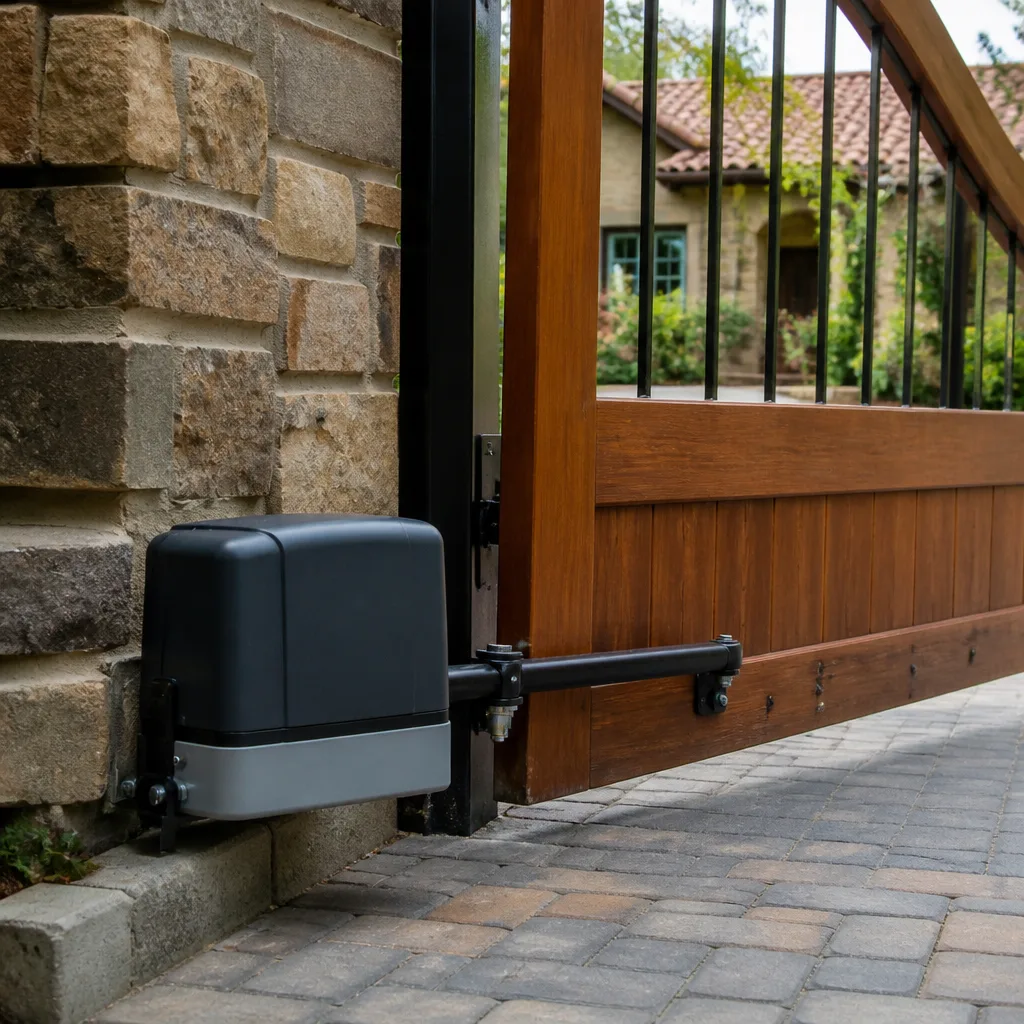 LiftMaster operators
Free on-site gate assessment - hinges, posts, and your LiftMaster or Nice gate operator checked before anything is quoted
The assessment is free and the quote is the invoice.
Get your free estimateGate Repair Maintenance Checklist for Aurora Homeowners
Most Aurora gate owners think of lubrication as the one maintenance task that matters, and they’re wrong. The check that prevents the most expensive failures in this area is the force-sensitivity setting on the operator, and it’s the one almost nobody performs after winter. When clay-heavy soil shifts and gate frames expand through a Fox Valley freeze-thaw cycle, the system fights back against its own limit switch, and motors that passed inspection months earlier start overheating. This guide covers gate repair and maintenance as a calendar, not a vague spring-and-fall routine.
What follows is a month-by-month schedule timed to Aurora’s real seasonal transitions, the lubrication products that survive a -15°F morning and the ones that crack seals, a self-test for entrapment protection, post-storm inspection steps for high-wind and ice events, and a logging system that protects your warranty. Whether you own a Mighty Mule swing gate or a LiftMaster slide operator, this guide applies to your equipment.
Quick Answer
Aurora homeowners should check gate force settings, hinges, and track alignment monthly, lubricate with a cold-rated product every two to three months, and perform a full entrapment protection test and post-storm inspection after every major weather event. The highest-value tasks are force-setting checks after winter, a spring hardware inspection when the ground thaws, and a fall pre-freeze review before the first hard frost. Everything else builds around these three anchor points.
Styles & brands we work with
- Wrought iron
- Wood & steel frame
- Farm & ranch
- Sliding driveway gates
- LiftMaster operators
Table of Contents
- Why Aurora’s Climate Changes What Your Gate Needs
- The Month-by-Month Maintenance Calendar
- Lubrication: What Works in a -15°F Winter and What Doesn’t
- How to Test Entrapment Protection Per UL 325
- Post-Storm Inspection After Wind and Ice Events
- How to Log Maintenance to Protect Your Warranty
- Power, Wiring, and the Parts You Should Never Touch
- When Repair Stops Making Sense
Why Aurora’s Climate Changes What Your Gate Needs
Aurora sits on clay soil that swells and shrinks with the seasons, and that movement is felt at every gate post. A post that looks set in July will ride up or settle slightly after the January freeze, which tilts the gate panel a fraction of an inch. That fraction of an inch is enough to change the load on a swing arm or bind a slide gate against its track. Generic maintenance checklists written for mild climates miss this entirely, and it’s why gates in Aurora fail in ways that gates in warmer places don’t.
Three local stressors drive the wear pattern here:
- Clay-heavy soil. Our soil holds water, expands when it freezes, and contracts when it dries. Gate posts move with it. Hinges and hardware take the stress.
- Road salt migration. Aurora’s arterials get salted through the winter, and salt drifts onto nearby driveways, gate tracks, and hardware. It attracts moisture and accelerates corrosion on chains, gears, and steel frames.
- Mineral-rich water. Tap water in this area carries mineral content that leaves deposits on chains and slides. Using it to rinse a gate seems harmless, but it deposits scale that builds up over a season.
If your gate lives near a main arterial, expect salt exposure to be a bigger factor than sun exposure. If it sits on a side street, soil movement is usually the dominant stressor. Either way, the calendar below assumes Aurora-level cold: winters that dip below zero, spring thaw that softens footing, and late-summer heat that bakes hardware. For area-specific repairs that go deeper than maintenance, gate repair covers the diagnostic side of what we walk through below.
The Month-by-Month Maintenance Calendar
Generic checklists split the year into “spring” and “fall.” That’s too coarse for Aurora, where the ground can be frozen in March and thawed enough to shift by April 20. The schedule below follows the transitions this city actually experiences. It’s written for both automated and manual gates, though the automated operators need the extra operator checks.
- January-February: Visual inspection of the gate from inside a warm car, then a walkaround on a mild day. Look for sagging, ice buildup on the track, and any hesitation in the operator. Do not force a frozen gate to move. Wait for a thaw or clear the ice by hand.
- March: Force-setting check (see the entrapment section). The ground is still frozen, so this test tells you how the operator behaved through winter. Note any hesitation for comparison next month.
- April, after the thaw: Post-thaw hardware inspection. Hinges, bolts, and anchors get checked for looseness. The post that rode up during freeze will have settled by now. This is the single best month for a professional inspection if you’re going to schedule one.
- May: Full lubrication pass. Cold-rated grease on hinges and pivot points, dry-film lubricant on the track and chain. Check the sensors and reflectors for winter debris.
- June-August: Monthly checks only. Look for insect nests in photocell eyes (a real problem in summer), weed growth under slide tracks, and any new noise from the operator.
- September: Post-storm inspection if Aurora has had a wind event or early ice storm. Swing arms torque out of alignment easily in high wind. Straightening them now prevents a bind when the gate gets heavier in cold weather.
- October: Pre-freeze review. This is the second high-value month. Lubricate with a cold-rated product while temperatures are comfortable. Check the operator’s manual override to make sure it works before you might need it in a freeze. Test the entrapment (reverse) function again.
- November-December: Monthly visual. Keep the track clear of leaves. Do not run the gate if ice has built up on the track. A gate forced through ice-loaded tracks damages the operator gearbox.
If you’re in Aurora and prefer to have the calendar driven for you, our free estimate process includes an inspection that matches this schedule. The point is consistency. A gate that gets four small checks a year lives longer than one that gets a single all-day tune-up in spring.
Lubrication: What Works in a -15°F Winter and What Doesn’t
Most general-purpose lubricants freeze solid or gellify at the temperatures Aurora sees. A spray of standard white lithium grease on a hinge in July becomes a sticky, near-solid paste by January, which drags on the hinge and strains the operator. The gate works harder, the motor draws more current, and a part that was fine in summer fails in the cold. The right product is not the thickest or the most expensive one. It’s the one rated for low temperature and formulated for the specific part.
Here’s what works and what to avoid around Aurora:
- Hinges and pivot points: A low-temp rated synthetic grease rated for at least -20°F. Avoid standard white lithium in the cold. It’s fine in summer and problematic by February.
- Chains and slide tracks: Dry-film PTFE or silicone lubricant. Wet lubricants attract grit and salt, which forms an abrasive paste. Dry-film doesn’t.
- Rollers: A few drops of a light oil specified for the brand, not grease. Over-greasing rollers is a common error.
- Avoid: WD-40 as a primary lubricant (it’s a penetrant, not a long-term solution), petroleum jelly (thickens to a paste in cold), and mineral-oil-based sprays that attract salt.
Apply lubricant thin. Extra grease collects dust, salt, and ice, and turns a pivot into a grinding point. Wipe away excess with a clean cloth. If a hinge weeps grease after a cold snap, that’s a specific sign it took on water and needs to be repacked or replaced. On heavyweight commercial operators like those on FAAC or Elite swing systems, the manufacturer’s guidance on gearbox oil intervals overrides anything generic. Stick to the brand spec there.
How to Test Entrapment Protection Per UL 325
UL 325 is the safety standard for automated vehicular gates, and it requires two independent entrapment protection systems: one inherent in the operator (force sensitivity or an internal limit), and one external (photocells, safety edges, or a monitored loop). The self-test is simple, and it’s the one safety check most homeowners never perform. Do it monthly and any time the gate stops working normally, because a failed reverse function is a serious safety issue, not just a nuisance.
- Test the photocells first. With the gate stationary in the open position, wave a hand or a piece of cardboard through the photocell beam. The operator should not accept a close command while the beam is blocked. If it closes anyway, the photocells are misaligned, dirty, or failed.
- Test the force sensitivity. Put a piece of 2×4 flat on the ground where the gate’s leading edge will contact it. Command the gate to close. The gate should reverse on contact. If it presses into the board with force, the force setting is too high.
- Test the reverse. Once the gate begins closing, pass through the beam or press the reverse button on the safety edge. The gate should stop and reverse without delay. If it stops but does not reverse, the operator logic needs to be checked.
- Check the fail-safe. Disconnect power to one photocell (unplug it) and command the gate to close. It should refuse to close at all. A gate that closes with a dead photocell has a failed safety circuit.
Never adjust a force setting yourself to “make it close” if the gate is binding. High force hides a mechanical problem and creates a crushing risk. Force settings belong in the hands of a technician who can measure the gate’s actual load and set the operator to spec. If your gate fails any of the four steps above, stop using it and get it looked at. Call (866) 361-5021. We answer 24/7. Fast dispatch from 7am to 7pm, Sunday through Friday.
Post-Storm Inspection After Wind and Ice Events
Aurora gets high-wind events and ice storms that torque swing gate arms and slide tracks out of alignment. The gate looks fine until the next time you use it, and then the operator strains against a hinge that’s been pushed two degrees out of true. Post-storm inspection is a ten-minute walkaround that catches these misalignments before they become repairs.
Run this check after any wind event strong enough to move branches, and after every ice storm:
- Swing gates: Stand to the side and look along the gate panel. It should sit flush with the fence line and at the same height as its mate if it’s a double. A gate that’s twisted will show a gap along the latch edge. Check the arm mounting bracket where it attaches to the gate leaf. High wind bends the bracket before it damages the operator.
- Slide gates: Walk the track from end to end. Debris, downed branches, and gravel swept by wind all jam the rollers. Look for the gate sitting off-center on the track. Alignment issues show up as the gate canting against one roller.
- All gates: Look for ice buildup in the track, on the latches, and around the operator housing. Do not force anything through ice. If the gate is frozen in place, wait for it to thaw or clear it by hand with a plastic scraper. Never use a metal tool on the track.
- Sensors: Wind-driven debris knocks photocells out of alignment. Check the beam manually after every storm. Snow and ice on the reflector face will also read as a blocked beam to the operator.
If your gate was running fine before the storm and won’t close now, it’s usually a sensor issue or an out-of-alignment hinge. Both are quick diagnostics. Call (866) 361-5021 for a free estimate. If the gate was already straining before the storm, the storm just made an existing problem visible. Electric gate repair is where we go deeper on operator, wiring, and control board issues.
How to Log Maintenance to Protect Your Warranty
A maintenance log does two things. It protects your warranty coverage on the operator, and it gives the next technician a history of the gate’s behavior, which is worth more than any single inspection. Many operators are warranted for a defined period contingent on documented maintenance. Without records, a manufacturer can decline a gearbox claim on the grounds that the part failed from neglect rather than defect. Whether your gate runs a LiftMaster residential operator or a heavy-duty FAAC commercial unit, the warranty terms are similar in one respect: documented care is your proof.
A useful log has six columns and fits on a single page:
- Date of the task
- Task performed (force check, lubrication, post-storm inspection, professional service)
- Product used (brand, product name, rating)
- Any observation (a hinge that hesitated, a sensor that misread once, a gate that sagged slightly)
- Who performed it (you or a technician)
- Photo reference number if you take photos of anything unusual
The observation column is the important one. A technician can diagnose a failing gearbox from a pattern of “hesitation on cold mornings” better than from a visual inspection alone. Keep the log near the gate, or keep a photo on your phone. Update it the day of the task, not weeks later. If a maintenance record is going to be used for a warranty claim, it also needs to include the professional service entries, not just your own monthly checks. Our field technicians can log the professional side of this for you on each service call.
Power, Wiring, and the Parts You Should Never Touch
An automated gate has parts you can safely maintain and parts that can injure or kill you. The distinction matters. Hinges, tracks, chains, latches, and photocell alignment are all homeowner-accessible tasks. The operator’s wiring, the control board, the power supply, and the transformer are not. We say this plainly because gate operators typically run on line voltage, and miswiring a control board or poking at a terminal block while the circuit is live is a genuine electrocution risk. Even after the breaker is off, the operator’s capacitor can hold a charge.
Here’s the split:
- Safe for you: Visual inspection, lubrication, cleaning sensors and reflectors, clearing debris from the track, testing entrapment protection, logging observation.
- Not safe for you: Any work inside the operator housing, adjusting force settings, opening the control board enclosure, testing or replacing the transformer, adding new wiring, or bypassing the safety circuit.
- Also dangerous: Heavy gate panels that can fall if the hinge is compromised. Slide gates that come off the track under load. Neither should ever be lifted or pushed back on by hand.
If you suspect a wiring issue (the operator clicks but doesn’t move, or behaves erratically after a storm, or the gate closes on its own), stop and call. We diagnose the power side, the control board, and the receiver on the bench before we go hands-on. Call (866) 361-5021 for a free estimate. If a gate is being installed for the first time, wiring is part of the scope. Gate repair Aurora handles the whole job, including the electrical coordination, so you’re not hiring a separate electrician for the power run.
When Repair Stops Making Sense
The decision point between repair and replacement is usually three things: the repair cost as a share of replacement, the age of the operator, and whether the gate panel itself is sound. A control board on a five-year-old operator is almost always worth replacing. A gearbox on a fifteen-year-old operator that’s already on its second control board is usually not. The gate panel, if it’s in good shape, can usually survive an operator change and outlive two or three motor replacements.
Replacement also opens options that repair doesn’t. A Mighty Mule swing gate operator that’s been repaired twice can be upgraded to a heavier-duty LiftMaster that handles the same gate with less strain. A residential slide gate that’s underpowered for its weight can move to a commercial-grade operator rated for the duty cycle. When we look at an Aurora gate, we’re evaluating the whole system: the panel, the track or hinges, the operator, and the safety edges. If the panel has a permanent twist from a wind event, replacing the operator is fixing the wrong part.
We install and repair both residential and commercial gate systems. If you’re weighing repair versus replacement, ask us to price both on the same visit. What we won’t do is guess. A written estimate followed by a walkthrough of the tradeoffs is what you should get from any gate specialist. Call (866) 361-5021 for a free estimate. We answer 24/7. Fast dispatch from 7am to 7pm, Sunday through Friday.
Common Mistakes to Avoid
- Skipping the force-setting check after winter. This is the one task that saves the most expensive failures. The operator works harder than its limit is set for when the gate gets heavier in cold, and that’s a motor burnout waiting to happen. The check takes five minutes.
- Using standard lithium grease in cold weather. It gells below freezing, drags the hinge, and strains the operator. Cold-rated synthetic grease or dry-film PTFE on chains and slides.
- Over-greasing hinges and tracks. Excess grease collects salt, grit, and ice, turning a smooth pivot into a grinding one. Wipe off what you don’t need.
- Ignoring the photocell after a wind event. Aurora’s wind knocks photocells out of alignment more than most homeowners realize. An out-of-line photocell makes the operator think the gate should reverse, which triggers a “won’t close” complaint that looks like a motor failure.
- Forcing a frozen gate. A gate stuck in ice should be cleared by hand or left until it thaws. Forcing it through a powered cycle torques the gearbox and can strip the operator’s drive.
- Adjusting force settings yourself. High force hides a mechanical problem and creates a crushing hazard. This is a technician setting, not a homeowner one.
- Not logging anything. Without records, a warranty claim on a failed operator can be declined. A one-page log is cheap insurance.
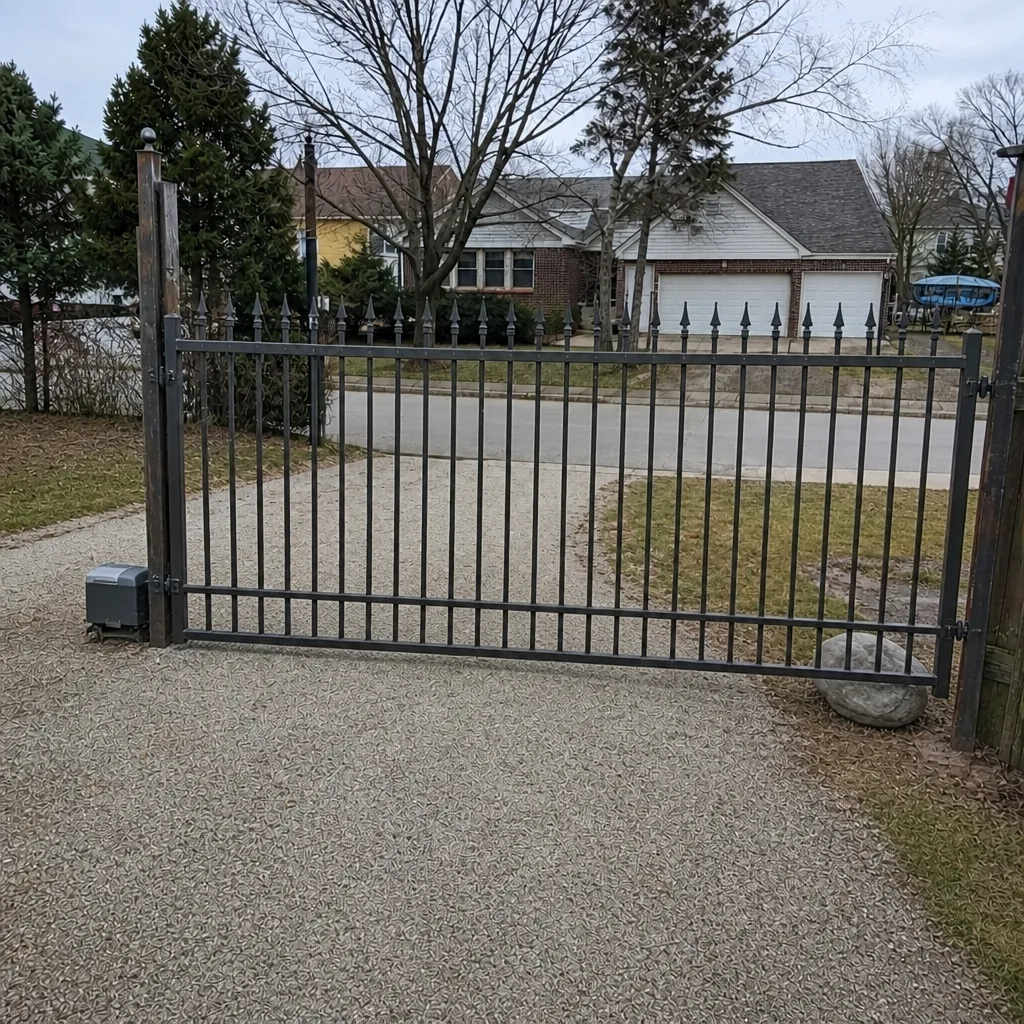
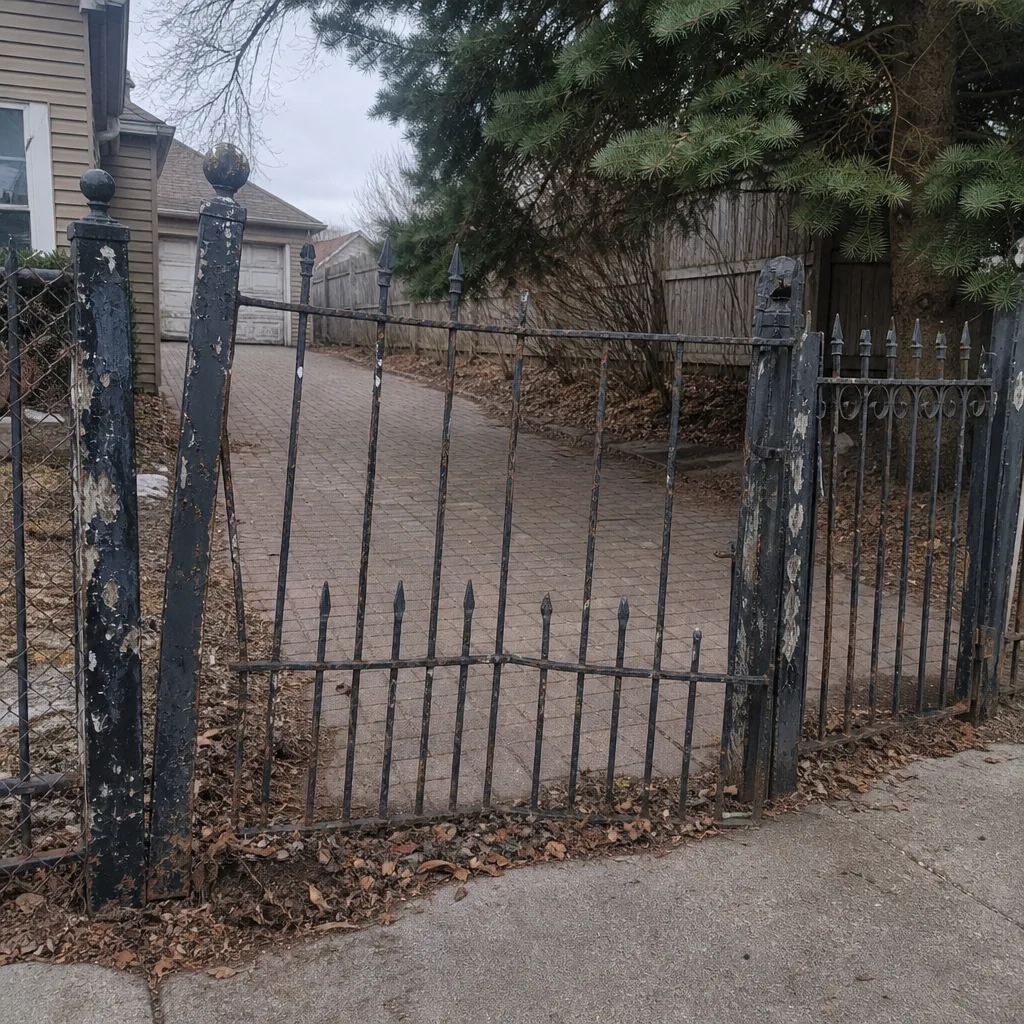
See the difference
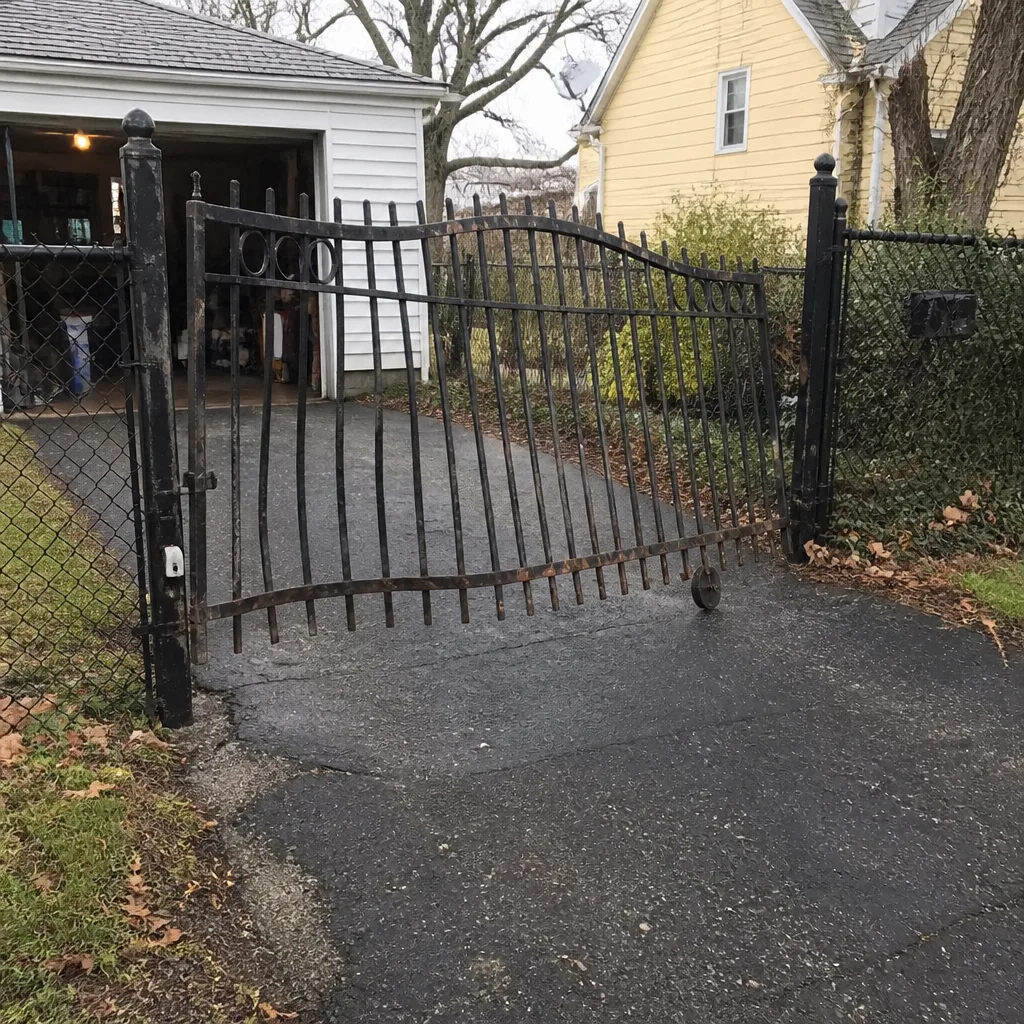 Before
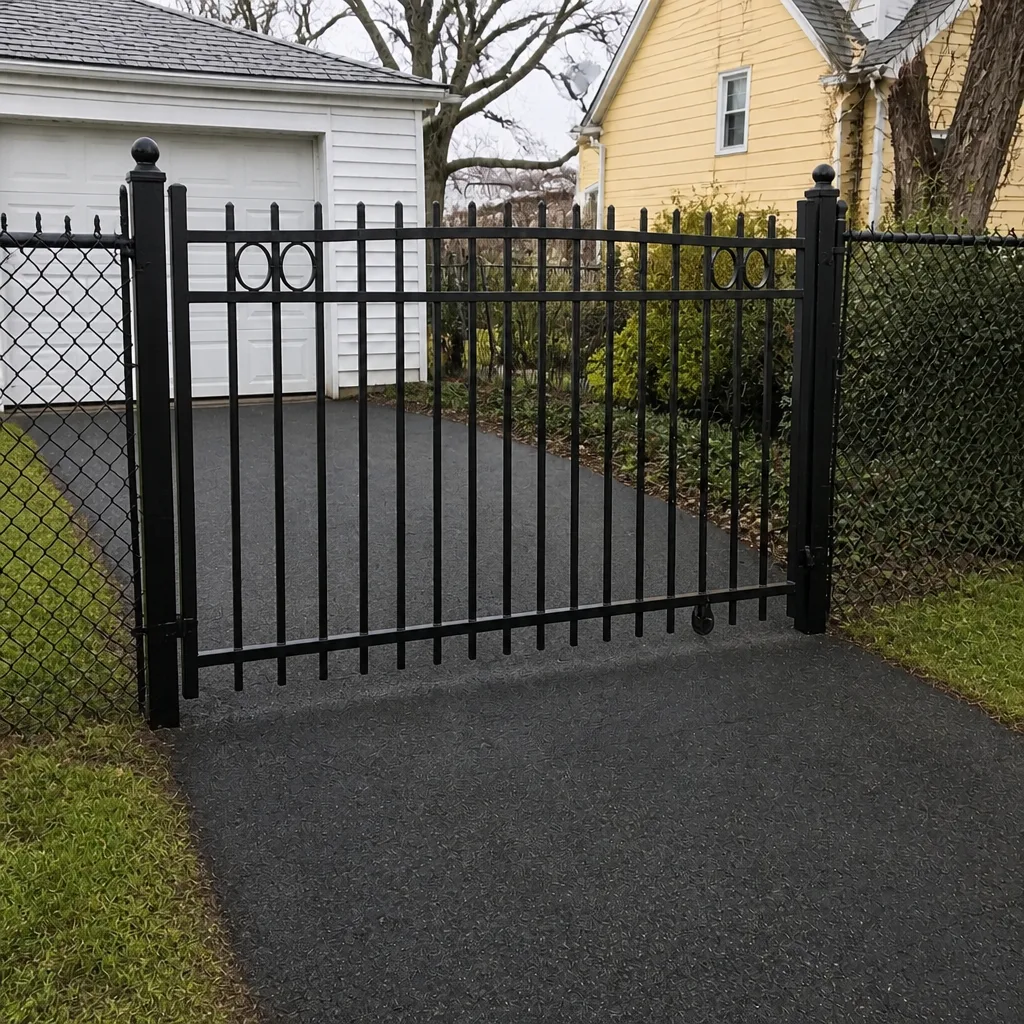 After
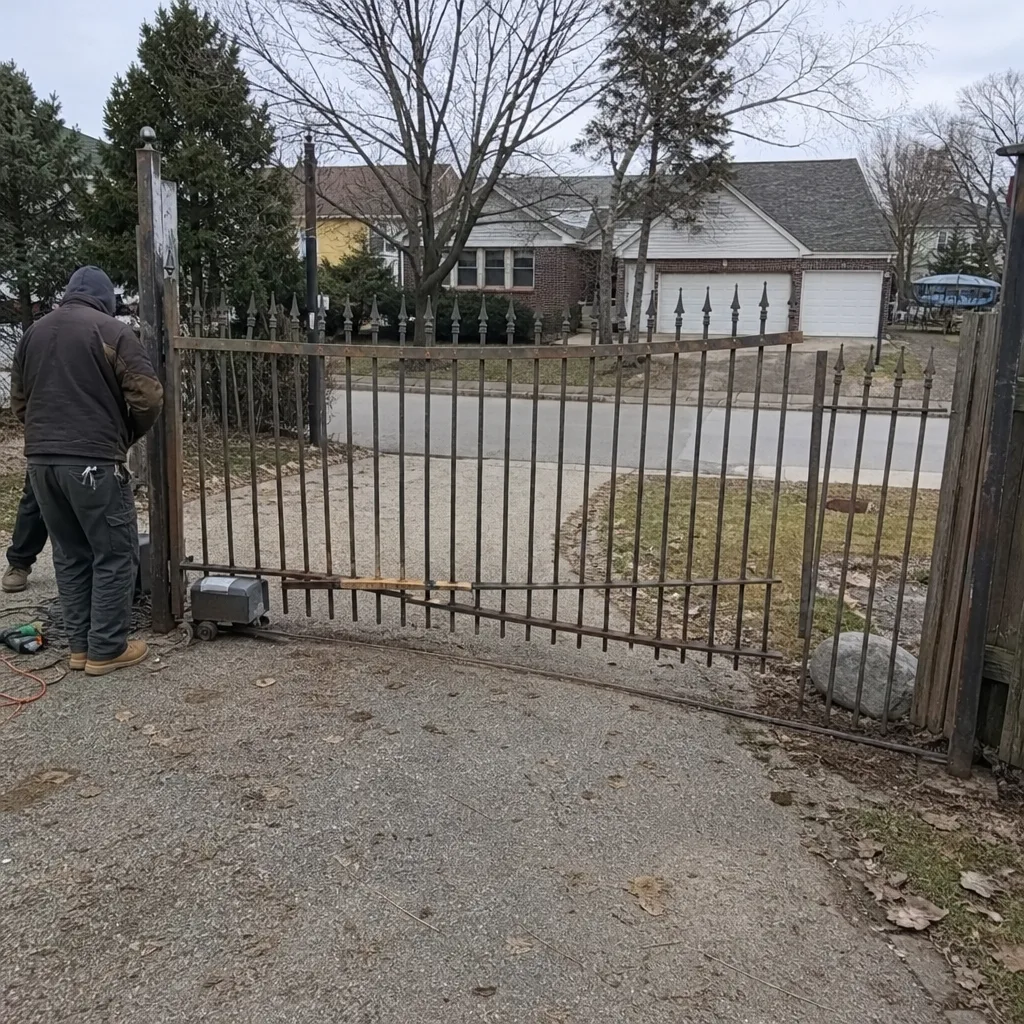 Before
 After
 Before
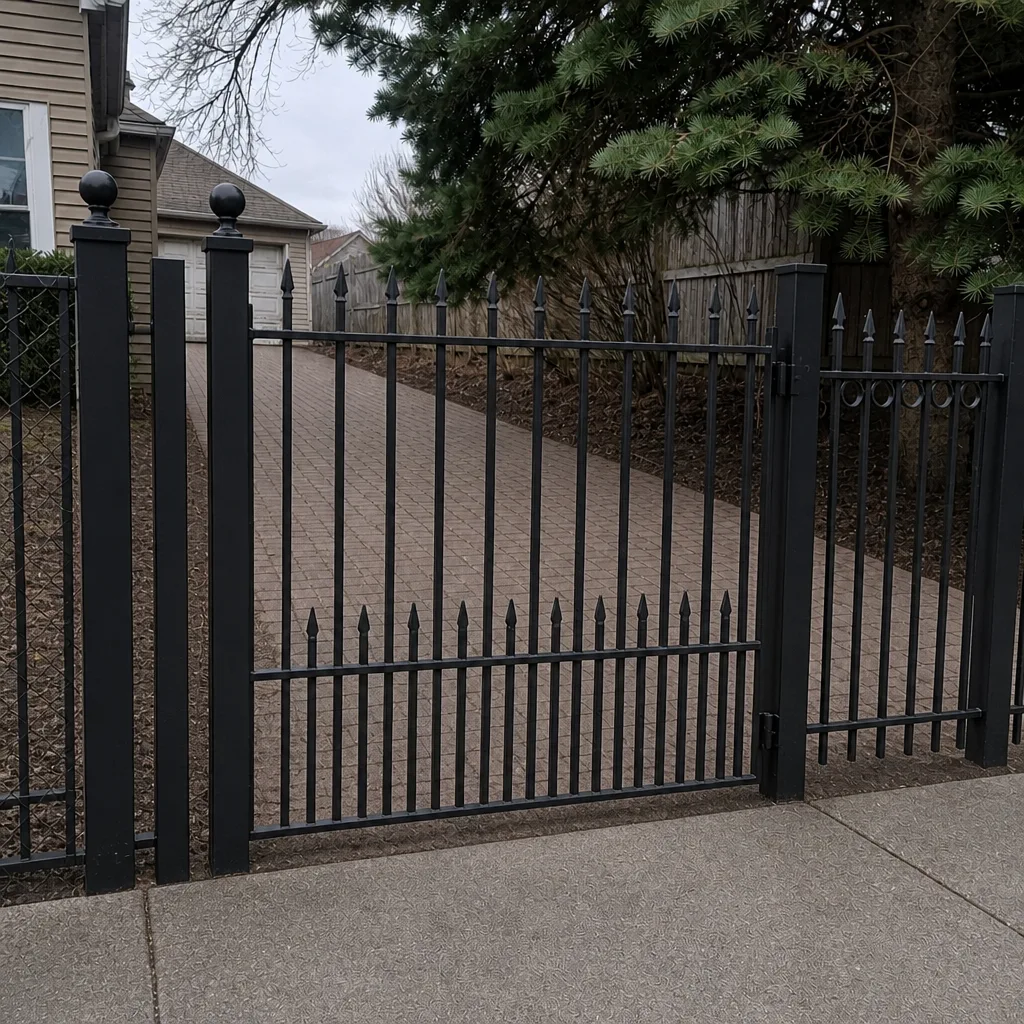 After
When to Call a Professional
Call a professional when a self-test fails, when the operator behaves erratically (closing on its own, hesitating, or drawing visibly more current), when an entrapment test doesn’t reverse, or when any part of the power wiring is suspect. Call when the gate sags, won’t center on the track, or drags against the ground. Call when you’re hearing new noise from the operator, because noise is almost always a bearing or gearbox telling you something. Also call before any work that requires opening the operator housing or the control board. In Aurora, Gate Repair Aurora offers free estimates on the repair side and on the replacement side. Call (866) 361-5021. We answer 24/7. Fast dispatch from 7am to 7pm, Sunday through Friday. If a call comes outside that window, we book it into the next opening, Sunday through Friday, 7am to 7pm.
Frequently Asked Questions
Monthly visual checks, quarterly lubrication, a force-setting check after winter and again in October, and a post-storm inspection after every high-wind or ice event. The spring thaw (April) and the pre-freeze window (October) are the two most important months for professional attention. Consistency matters more than depth on any single visit.
A low-temperature synthetic grease rated for at least -20°F on hinges and pivots, and a dry-film PTFE or silicone lubricant on chains and slide tracks. Standard white lithium and petroleum jelly become too thick below freezing. Avoid WD-40 as a primary lubricant; it’s a penetrant, not a long-term solution.
No. Force settings belong to a trained technician who can measure the gate’s load and set the operator to spec. High force hides a mechanical problem and creates a crushing hazard, especially on a gate with entrapment risk. If the gate won’t close properly, test the entrapment circuit and call for a diagnostic.
An inherent system inside the operator (force sensitivity or an internal limit) and an external system (photocells, safety edges, or a monitored loop). Both must work for the gate to be compliant. If either fails, the gate should refuse to close, and that’s the fail-safe behavior you’re testing.
Three signals: the repair cost as a share of replacement, the age and service history of the operator, and the soundness of the gate panel itself. A control board on a five-year-old operator is almost always worth replacing. A second control board on a fifteen-year-old unit is usually the point to upgrade. Get both priced on the same visit.
Yes. Many operators are warranted contingent on documented maintenance, and a manufacturer can decline a part claim on the grounds that the failure was from neglect rather than defect. A dated log with products used and observations noted is the difference between a covered gearbox and an out-of-pocket one. Include both your own checks and the professional service entries.
The Bottom Line
The gate maintenance tasks that matter most in Aurora are the force-setting check after winter, the post-thaw hardware inspection, and the pre-freeze review in October. Everything else builds around these three. Cold-rated lubrication, a working entrapment test, and a post-storm walkaround catch the failures that turn into expensive repairs. The rest is consistency. A gate that gets four small checks a year outlives one that gets a single annual tune-up, and the technician who inherits your log has a head start on any diagnosis. If you want the calendar driven for you, call us and we’ll map it to your specific gate.
Contact
If you’re in Aurora or nearby and want a gate specialist who handles both repair and installation, call Gate Repair Aurora at (866) 361-5021 for a free estimate. We work on the brands you own, including LiftMaster, FAAC, Linear, Viking, Ghost Controls, DoorKing, Elite, and Mighty Mule, on both residential and commercial gate systems. Power, control boards, receivers, and motor assemblies are what we do every day. Call (866) 361-5021. We answer 24/7. Fast dispatch from 7am to 7pm, Sunday through Friday.
Written by the team at Gate Repair Aurora.