
Last updated November 16, 2026
 Wrought iron
 Wood & steel frame
 Farm & ranch
 Sliding driveway gates
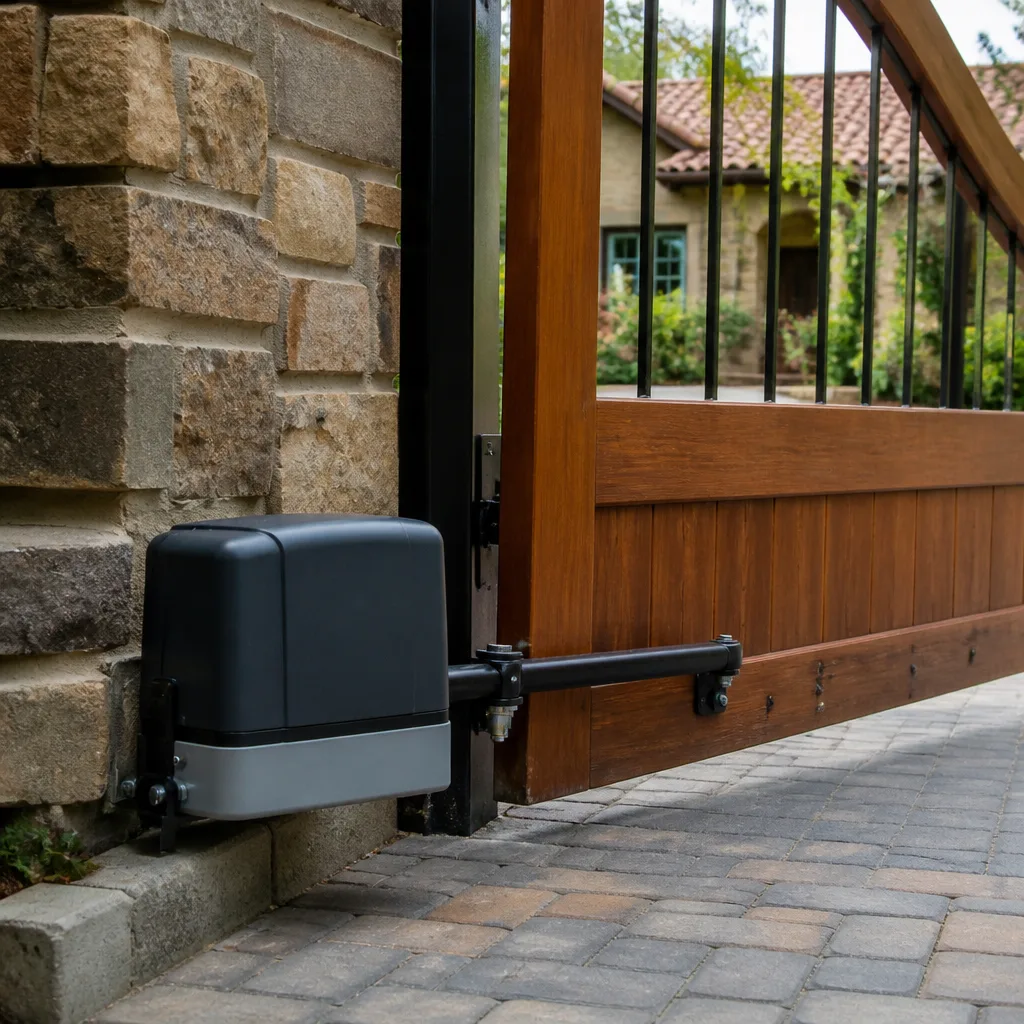 LiftMaster operators
Free on-site gate assessment - hinges, posts, and your LiftMaster or Nice gate operator checked before anything is quoted
The assessment is free and the quote is the invoice.
Get your free estimateGate Repair Maintenance Schedule: What to Do and When
Most gate maintenance guides were written in climates that never see a hard freeze. Follow those templates in Aurora and you get cracked hydraulic seals each spring and operators that choke into thermal overload every July. The seasons here stress a gate in ways a manufacturer’s pamphlet doesn’t account for. So this guide is built around the calendar you actually live in. You’ll get a month-by-month schedule, the exact lubrication each drive type needs, a twice-a-year safety test you can run yourself, and a clear line between the service you should pay for and the upsell you can skip.
Quick Answer
A working gate maintenance schedule in Aurora runs on a two-part rhythm: a homeowner check every month or two, and a full professional service once a year before the first freeze. The critical tasks are pre-winter preparation for hydraulic operators and battery backups, a spring inspection for freeze-thaw damage at hinges and anchors, component-specific lubrication, and a safety-reversal and loop-detector test twice a year. The rest is observation, and it catches most failures before they strand your gate.
Styles & brands we work with
- Wrought iron
- Wood & steel frame
- Farm & ranch
- Sliding driveway gates
- LiftMaster operators
Table of Contents
- Why Aurora’s Climate Sets the Maintenance Calendar
- Pre-Winter Prep: What to Do Before the First Hard Freeze
- The Spring Inspection: Catching Freeze-Thaw Damage First
- Lubrication by Component: Chains, Screw Drives and Hydraulic Arms
- How to Test Safety Reversal and Loop Detectors Yourself
- Summer Heat and the Operator: What July Actually Does to Your Gate
- What Annual Professional Servicing Includes (and What to Decline)
- A Month-by-Month Maintenance Calendar for Aurora
Why Aurora’s Climate Sets the Maintenance Calendar
An automated gate in Aurora lives through four very different kinds of stress in a single year. Winter brings repeated freeze-thaw cycles as daytime melt runs into joints and refreezes overnight. Spring hands you the damage that winter left behind. Summer bakes the operator housing and drives motor and control-board temperatures well above the air temperature. And fall is your one real window to get ahead of the next freeze. The Aurora area sits in a zone where that cycle is pronounced: cold enough for deep frost in the ground, warm enough in summer to punish an operator that’s tucked into a closed housing in full sun.
That matters because gate failures don’t happen randomly. In our experience they cluster around the two transition seasons, which is exactly when preventive work pays for itself. A gate that gets serviced in October and inspected in April rarely surprises its owner the rest of the year.
The schedule below is ordered around that reality, not around a generic checklist. If you already know something is wrong and you’d rather just get it fixed, that’s what gate repair is for. If you want to stay ahead of it, keep reading.
Key Takeaways
- Service your gate once a year before the first hard freeze, and inspect it once in spring.
- Hydraulic operators, battery backups and exposed wiring need winter-specific preparation.
- Lubrication is not universal: chains, screw drives and hydraulic arms each take a different approach.
- Test safety reversal and loop detectors twice a year, and know the pass/fail criteria.
- Know what a genuine annual service includes so you don’t pay for upsells.
Pre-Winter Prep: What to Do Before the First Hard Freeze
Pre-winter preparation is the single most important maintenance window on the calendar in Aurora, and it’s the one most homeowners skip. Water is the enemy here. It gets into a seal, a terminal block or a control enclosure, freezes, expands, and opens a crack that wasn’t there in September. Everything on the pre-winter list is about keeping water out and keeping the operator healthy through the cold.
Work through these steps before the ground freezes:
- Inspect hydraulic operator seals. Look for oily film, weeping at the ram, or a slow drift down in the arm when the gate is parked. A seal that’s already weeping won’t survive a freeze intact.
- Test the battery backup. If your operator uses a battery back-up, cut AC power at the breaker and confirm the gate still cycles. Replace a weak battery before winter, not during a power outage.
- Seal exposed wiring and conduit. Check that conduit ends, junction boxes and control enclosures are closed and dry. Water that reaches the control board in winter can take out the whole operator.
- Clear the track or swing zone. Remove debris, leaves and anything that will freeze into the path. A slide gate that jams on ice-loaded track can strip a gear or burn a motor.
- Check the operator housing for cracks. Small cracks let in meltwater that refreezes overnight. Seal them while it’s still warm enough for sealant to cure.
Operators from brands like FAAC and DoorKing often use hydraulic or heavy-duty electromechanical drives where a weeping seal is the first winter warning sign. On the residential side, Ghost Controls and Mighty Mule units lean on battery back-up and exposed control boards, so the enclosure and wiring checks matter most. Do these once, before the first hard freeze, and you’ve removed most of what breaks gates in January.
The Spring Inspection: Catching Freeze-Thaw Damage First
Spring inspection is where you find the wreckage. Freeze-thaw cycles move concrete, loosen anchors and work screws loose in ways you can’t see in winter. Catch it in April and it’s a small repair. Catch it in July and it’s a jammed gate and a burned-out operator. Go through the gate slowly, one component at a time, with the power off for anything you physically touch.
- Hinge wear. Open and close a manual swing gate by hand. Wobble, sag or a binding feel at the hinge means the hinge or its anchor has loosened over the winter.
- Concrete anchor shifting. Look at the plate bolts at the post base and the operator mount. A gap, a crack radiating from the anchor, or a bolt that moves when you put a wrench on it means the base has shifted with the frost.
- Corroded terminals. Open the control enclosure and look for white or green crust on the terminal blocks and connector pins. Corrosion is a classic freeze-thaw and condensation sign and it’s a leading cause of mystery intermittent faults.
- Operator alignment. Confirm the arm or the drive still lines up with the gate on both ends of travel. A post that moved a fraction of an inch makes the operator fight itself all summer.
- Rack and pinion (slide gates). Check the rack for loose fasteners and debris packed into the teeth. Clean and re-torque as needed.
Spring is also the right time to check that your safety devices still work, which the next section covers. On any operator with a control board and logic, an intermittent fault that started as a corroded terminal can look exactly like a dead board. Diagnosing that distinction is core electric gate repair work, so if you’re unsure, don’t guess.
Lubrication by Component: Chains, Screw Drives and Hydraulic Arms
“Lubricate moving parts” is not a maintenance instruction. Each drive type needs different treatment, and the wrong product does real damage. Here’s the correct approach by component, and the timing that goes with it.
Roller chains
Use a dedicated chain lubricant, or a clean motor oil for slower-moving chains. Apply a light coat along the chain while it’s running slowly, then wipe off the excess so it doesn’t collect grit. Re-apply after a wash or after any long dry spell. Avoid thick grease on an exposed chain: it holds dirt and grinds it into the pins.
Screw drives (slide gates)
A screw drive takes a lithium or PTFE-based grease, applied sparingly to the screw thread. Too much attracts grit and does the opposite of what you want. Wipe the screw clean before you re-grease, and re-apply a couple of times a year depending on how often the gate runs.
Hydraulic arms
Hydraulic arms don’t need routine external greasing in the way chains do. What they need is inspection. Keep the ram clean, check for weeping seals and pin wear, and follow the operator’s own hydraulic fluid guidance rather than topping up with a guess. FAAC hydraulic arms are common on residential and light commercial gates here, and their pins and seals are the wear points to watch.
A sensible lubrication calendar for Aurora is: chains and screw drives in spring and fall, a light top-up in late summer, and hydraulic arm inspection at both seasonal service visits. Linear and Viking operators on the residential side use their own drive types, so confirm which you have before you reach for the grease gun. One routine for every device is wrong.
How to Test Safety Reversal and Loop Detectors Yourself
Safety devices are the parts that prevent injury, so they deserve a test twice a year: once in spring, once before winter. You can run both tests yourself, and the pass/fail criteria are simple. If either fails, stop using the gate and get it looked at. A gate that closes on a person or a vehicle is not a maintenance issue, it’s a hazard.
Safety reversal test
- Start with the gate open and clear the area.
- Press close and, as the gate travels, pass a solid board or your phone box through the path to trigger the photoelectric sensor (the safety beam).
- Pass criteria: the gate stops or reverses on contact with the beam, every time. Fail: the gate keeps going through the interruption.
- Repeat at several points along the travel. A beam that works only mid-travel is misaligned.
Loop detector sensitivity
- With the gate closed and a vehicle-sized area free, drive a vehicle or metal test object over the loop.
- Pass criteria: the detector holds the gate open while the vehicle is present and for a short pause after.
- Test a person walking through the same loop. If the gate closes on a pedestrian that the loop should detect, the sensitivity is wrong.
- If the gate opens with nothing on the loop, suspect a damaged loop or a sensitivity setting that’s too high.
Loop sensitivity settings live in the detector or the control board and are adjustable. DoorKing access systems and commercial loops are common on multi-unit and HOA gates around Aurora, and mis-set sensitivity is one of the most frequent intermittent complaints we see. If a loop detector needs adjusting rather than replacing, that’s a quick fix. If the loop under the pavement is damaged, it’s a bigger job.
Summer Heat and the Operator: What July Actually Does to Your Gate
Summer heat is the second big stress point on an Aurora gate calendar. An operator in a closed housing in full sun runs hotter than the air around it, and the electronics and motor don’t like it. Thermal overload is the operator protecting itself: the gate stops, refuses to cycle, then works again once it’s cooled. If that’s happening to your gate in July, the operator is telling you something.
- Shade and ventilation. A housing with blocked vents or debris packed against it runs hotter. Clear it.
- Duty cycle. Heavy traffic on a commercial gate pushes an operator past its intended work cycle. If a high-traffic gate stalls every afternoon, the operator may be undersized for the job.
- Battery back-up and capacitor heat. Weak batteries and aged capacitors are more likely to fail in the heat, showing up as a gate that works fine in the morning and won’t start at 3pm.
- Photoelectric misalignment. Sunlight straight into a receiver can fool the beam on some gates. If the gate only fails when the sun hits it, suspect the beam optics.
Mid-summer is the time for a light check-in: clear the housing, confirm the beam, and test the battery backup. It’s not a full service, but it heads off the most common hot-weather failures. If your gate is thermal-tripping every day, the ceiling on that work is the written estimate: a specialist can tell you whether it needs service, a component, or a larger operator.
What Annual Professional Servicing Includes (and What to Decline)
A genuine annual service is mechanical, not cosmetic. It should cover the parts that cause failures: drive components, safety devices, electrical connections and the structural mounting. Here’s what’s worth paying for, and what you can reasonably decline.
What a real annual service covers
- Adjustment of safety reversal and loop detector sensitivity, and a documented pass/fail.
- Drive inspection: chain tension, screw wear, hydraulic arm seals and pins.
- Control board and terminal inspection for corrosion and loose connections.
- Anchor and mounting torque check, with alignment correction where the frost moved things.
- Lubrication of the components that actually take grease or oil.
- Battery back-up load test on operators that rely on one.
What you can skip
- Replacing parts that pass inspection “just in case.” A control board or motor that’s working doesn’t need swapping for preventive reasons.
- Full repainting or cosmetic work billed as maintenance. It’s not part of keeping the gate running.
- Parts that aren’t worn, at a premium, with no measurable benefit on the tested gate.
On brand-specific systems the service should match the gear. A LiftMaster residential operator gets a different service than a heavy FAAC or BFT commercial drive, and a competent service should say which it’s doing and why. When you’re choosing a company, ask what the service includes and who does the work. Our technicians have up to 9 years of experience across residential and commercial gate systems, and we work on your brand, not just the ones we prefer. It’s a reasonable thing to ask about anyone you hire.
A Month-by-Month Maintenance Calendar for Aurora
Here’s the schedule, mapped to the seasons that stress an Aurora gate. Treat it as a rhythm rather than a rigid list. The exact month depends on the year, but the sequence rarely changes.
- Early spring (after the thaw): full spring inspection. Hinges, anchors, terminals, alignment, rack and pinion. Test safety reversal and loop sensitivity.
- Mid spring: lubricate chains and screw drives. Clean the operator housing and vents. Check battery backup.
- Early summer: clear the track and swing zone, verify photoelectric alignment against low sun, and watch for thermal tripping.
- Late summer: light lubrication top-up on exposed drive components. Test the safety devices again if you’ve had a lot of thermal tripping or power cuts.
- Early fall: full annual professional service before the first freeze. This is the big one.
- Late fall (before the hard freeze): hydraulic seal check, battery load test, wiring and enclosure sealing, and a final track or swing-zone clear.
- Winter: observation only. Keep ice off the track, keep the swing zone clear, and note anything that behaves oddly. Don’t apply lubricant to a frozen chain.
If your gate has an older control board, add a quick terminal inspection to each of the two seasonal visits. Brands like Linear and Viking use residential-grade boards where a single corroded pin can cause an intermittent fault that’s hard to trace later. Caught early, it’s a cleaning job. Caught late, it can be a replacement.
Common Mistakes to Avoid
- Applying the same grease to every gate. Chains, screw drives and hydraulic arms take different products, and thick grease on an exposed chain turns into a grit magnet. Match the lubricant to the drive you actually have.
- Skipping the pre-winter service because the gate “still works.” The seal that fails in January looked fine in September. Winter finds the weakness, so service it before that happens.
- Ignoring a safety device that “just needs a nudge.” If the reversal doesn’t trigger on test, stop using the gate. A misaligned beam or mis-set loop sensitivity is a hazard, not a quirk.
- Packing the control enclosure against a wall. Water and heat both need somewhere to go. Blocked vents and sealed-in enclosures are common causes of summer and winter faults.
- Treating a thermal trip as a broken gate. An operator that stalls in July and works in the evening is telling you it’s overheated, not dead. Diagnose before replacing.
- Letting the spring inspection slip to summer. Freeze-thaw damage at anchors and hinges compounds. A loose bolt in April is a jammed gate by July.
- Buying a “maintenance visit” that’s just a wash and a look. A real service covers safety testing, mounting torque and terminal inspection. Ask what’s included before you book.
See the difference
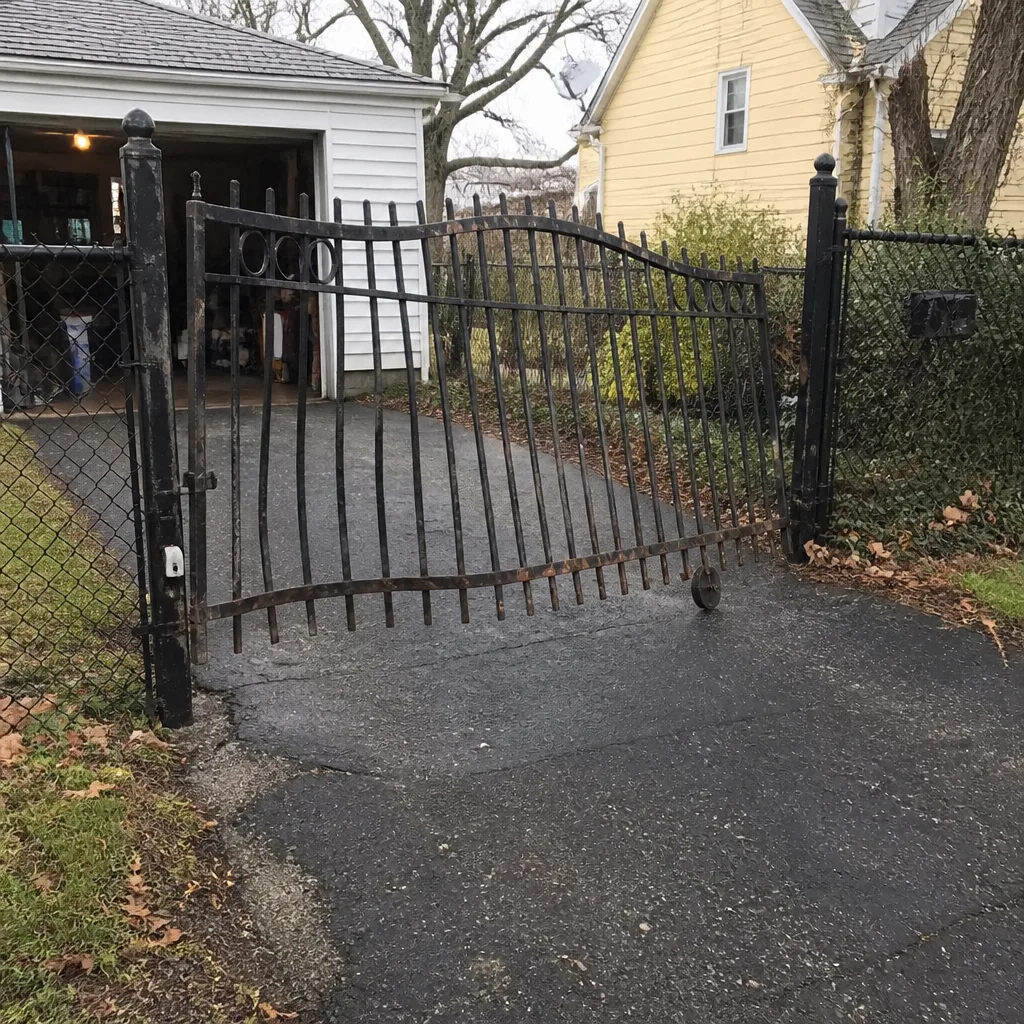 Before
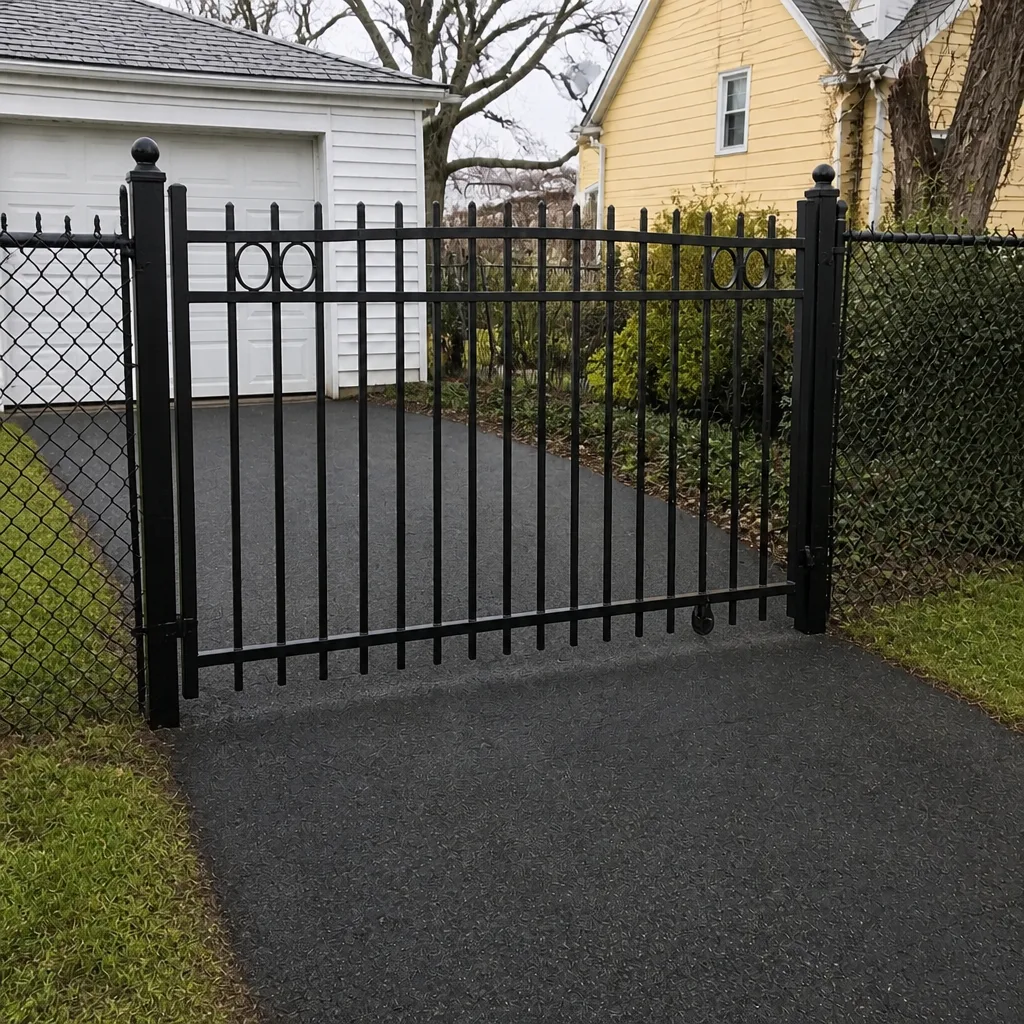 After
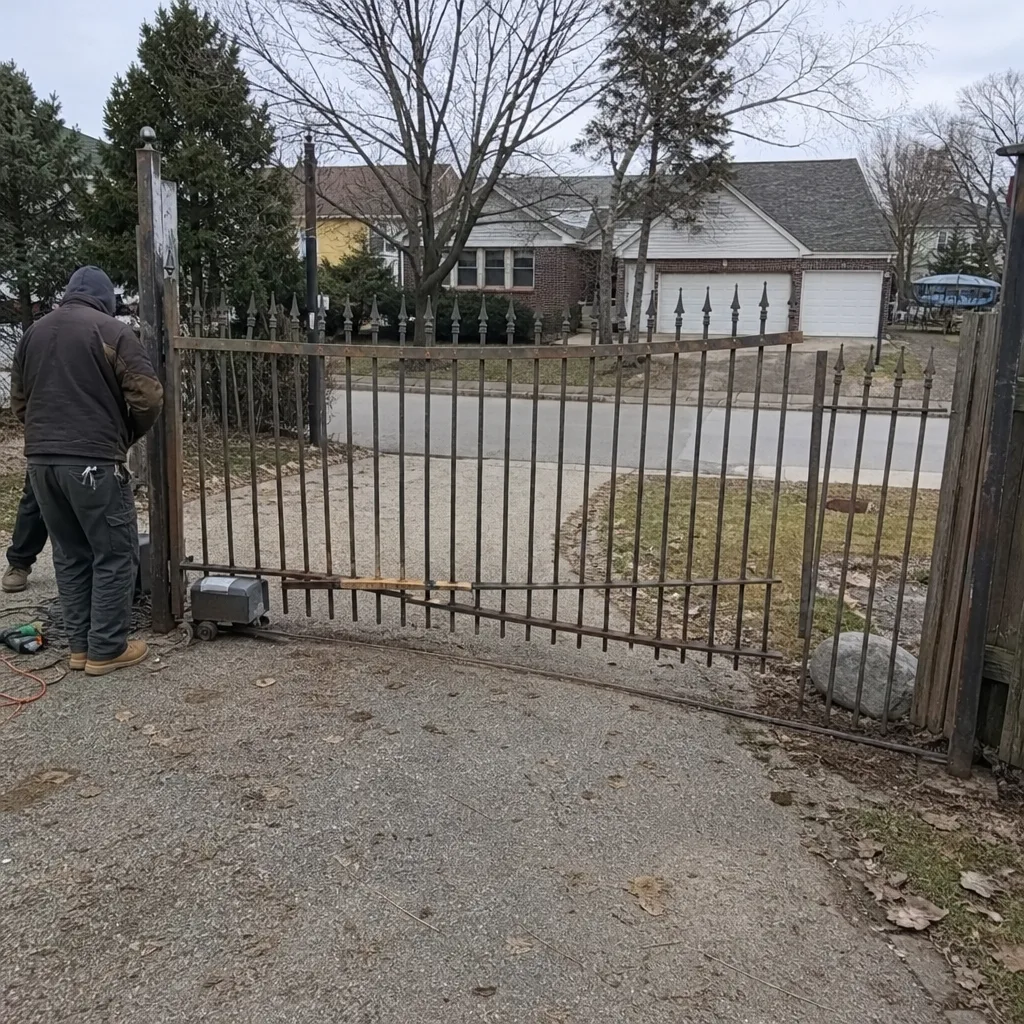 Before
 After
 Before
 After
When to Call a Professional
Some of this you can do. Some of it you shouldn’t. Call in a professional when the gate has power and won’t move, when a safety reversal or loop test fails and stays failed, when you see a cracked anchor or a post that’s shifted, when a control board shows corrosion you can’t confidently diagnose, when hydraulic seals are weeping, or when an operator thermal-trips every day in the heat. Anything involving the operator’s internal wiring, the control board, or a gate that controls itself around people deserves a trained eye. Most of it is beyond a safe DIY fix.
We repair or replace, so you don’t need a second contractor if the diagnosis turns out to be a failed operator. Gate Repair Aurora offers free estimates in Aurora. Call (866) 361-5021. We answer 24/7. Fast dispatch from 7am to 7pm, Sunday through Friday.
Frequently Asked Questions
Once a year professionally, before the first hard freeze, plus a spring inspection after the thaw. That two-visit rhythm matches the local climate: winter does the damage, spring finds it, and fall gets you ahead of the next freeze. Between those visits, a monthly visual check and a twice-yearly safety test are enough.
Yes. With the gate traveling closed, interrupt the safety beam with a board or a box. The gate should stop or reverse every time; if it keeps closing, stop using it and get it checked. Loop detectors are tested just as easily: drive over the loop and confirm the gate holds open, then walk through and confirm it detects a person. Test both twice a year.
Check hydraulic seals for weeping, test the battery backup with the AC off, seal exposed wiring and enclosure entry points, clear the track or swing zone, and close any cracks in the operator housing. That’s the short list that prevents most winter failures. A full annual service is the thorough version.
It depends on the drive. Chains take a chain lubricant or light oil, applied thin and wiped clean. Screw drives take a sparing lithium or PTFE grease on the thread. Hydraulic arms need inspection and the operator’s own fluid guidance, not routine greasing. Identify the drive type before you buy anything, because the wrong product on an exposed chain collects grit and grinds the pins.
Skipping the annual service is the main reason gates fail in bad seasons. A real service is mechanical: safety testing, anchor torque, terminal inspection, drive wear and battery load. What you can skip is the cosmetic stuff and “just in case” part replacement. Ask what’s included, decline what isn’t, and keep the safety tests on the list.
Thermal overload. The operator runs hotter than the air in a closed housing in full sun and shuts itself down to protect the motor and electronics. Clear the vents, check the drive, and test the battery. If it happens every day, the operator may be undersized for the gate or the traffic it carries, so it’s worth having it looked at.
The Bottom Line
A gate in Aurora doesn’t need a maintenance schedule built for a mild climate. It needs one built around a hard freeze, a thaw, and a hot July. The rhythm is simple: service before winter, inspect in spring, lubricate by component, and test your safety devices twice a year. Do those things and you’ll catch most failures at the cheap stage. Know what a real service includes, so you can decline the upsells and keep what protects the gate. If something’s already broken, a specialist who works on your brand can tell you whether it’s repair or replace, and quote it in writing before any work starts.
Call (866) 361-5021 for a free estimate. We answer 24/7. Fast dispatch from 7am to 7pm, Sunday through Friday. You can also start at Gate Repair Aurora to see the full range of gate services we handle.
Written by the team at Gate Repair Aurora.